
Species profile
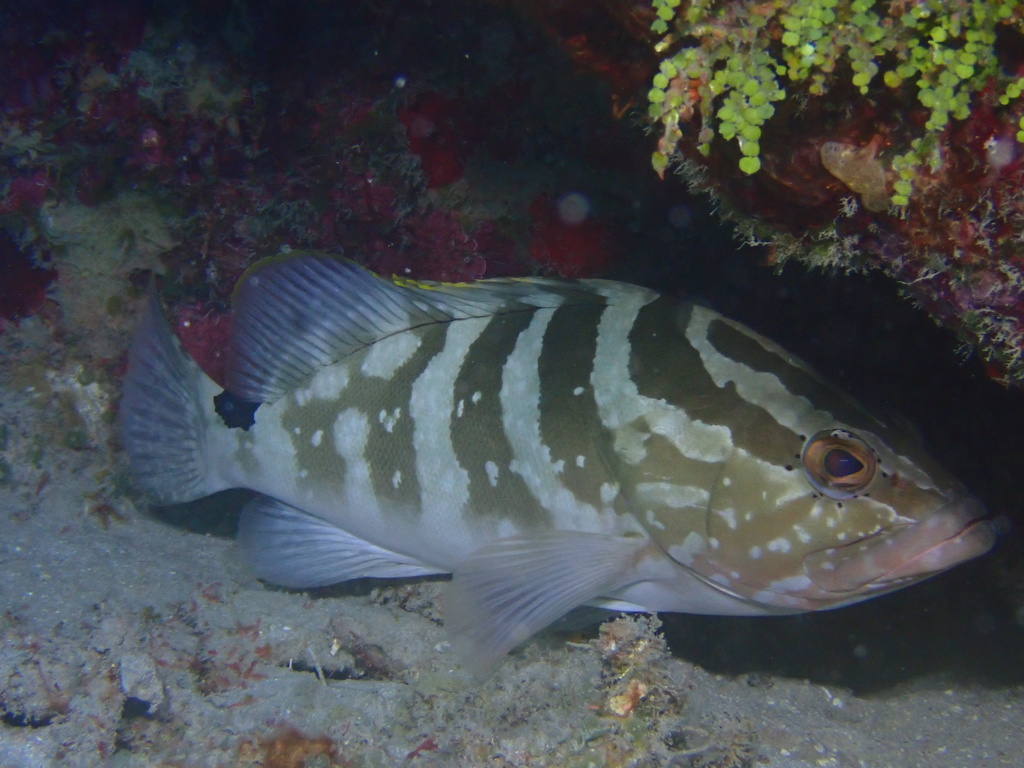
Nassau Grouper
Epinephelus striatus
Identify Nassau Grouper (Epinephelus striatus) from a photo: try it free in your browser, or get unlimited IDs, no sign-up, with the CatchRules app. Plus current fishing rules across 2 jurisdictions.
At a glance
Nassau Grouper (Epinephelus striatus) is an IUCN Critically Endangered bony-fish species regulated in 7 of 66 jurisdictions tracked by CatchRules across the U.S. and Canada.
The strictest bag limit is 4 (Federal Waters (NOAA)); the most generous is 10 (California).
Confirmed by 19 research-grade iNaturalist observations, concentrated in Florida.
Listed under MSA and the U.S. Endangered Species Act — verify protected-species rules with the issuing agency before retaining or handling.
Notable details
- Gathers in spawning aggregations of thousands at the same reef sites each year.
- Listed as Critically Endangered on the IUCN Red List due to overfishing of spawning aggregations.
- Born female; some individuals later transition to male.
- Can rapidly change color and body pattern to blend into different backgrounds.
- Can live up to 29 years.
Where Nassau Grouper are seen
Jurisdictions with rules for Nassau Grouper
Protected status
- No harvest in US federal waters.
- Nassau grouper.
Always verify protected-species rules with the issuing agency before retaining or handling.
Background
The Nassau grouper (Epinephelus striatus) is one of the large number of perciform fishes in the family Serranidae commonly referred to as groupers. It is the most important of the groupers for commercial fishery in the West Indies, but has been endangered by overfishing.
Background excerpt adapted from Wikipedia's Nassau Grouper article (CC BY-SA). Visit Wikipedia for the full entry.
Other bony fish on CatchRules
Frequently asked questions
What is Nassau Grouper?
Nassau Grouper (Epinephelus striatus) is an IUCN Critically Endangered bony-fish species regulated in 7 of 66 jurisdictions tracked by CatchRules across the U.S. and Canada.
What is the scientific name for Nassau Grouper?
Nassau Grouper is Epinephelus striatus.
Is Nassau Grouper regulated for fishing?
Yes — Nassau Grouper has fishing regulations in 2 U.S. states and/or Canadian provinces tracked by CatchRules. See the "Jurisdictions with rules" section above for the binding-source links.
How can I identify Nassau Grouper?
Take a photo with the free CatchRules app for iPhone or Android — on-device identification recognizes Nassau Grouper along with ~1,500 other species. No sign-up, unlimited use.
Photo credit: iNaturalist / Wikipedia. Identification reference only — verify regulations with the issuing wildlife agency before retaining a catch.