
Species profile
Lamprey
Entosphenus tridentatus
Identify Lamprey (Entosphenus tridentatus) from a photo: try it free in your browser, or get unlimited IDs, no sign-up, with the CatchRules app. Plus current fishing rules across 7 jurisdictions.
At a glance
Lamprey (Entosphenus tridentatus) is an invertebrate regulated in 13 of 66 jurisdictions tracked by CatchRules across the U.S. and Canada.
Confirmed by 398 research-grade iNaturalist observations, with California, Oregon, and Washington the top jurisdictions by observation count.
Notable details
- Pacific lamprey larvae live buried in stream sediment for up to 7 years before metamorphosing.
- Adults can grow up to 30 inches long.
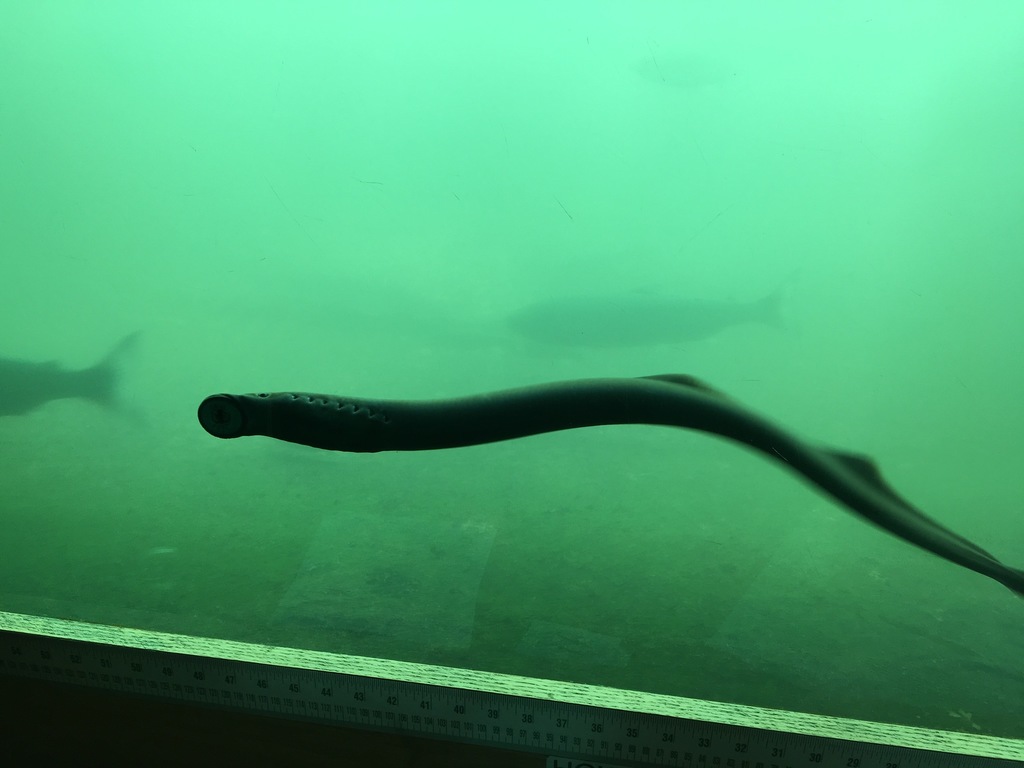
- Their circular sucker mouth is lined with dozens of sharp teeth arranged in concentric rings.
- After migrating hundreds of miles upstream to spawn, adults die immediately after.
- Pacific lamprey are culturally significant food fish for many Pacific Northwest tribes.
Where Lamprey are seen
Jurisdictions with rules for Lamprey
Background
The Pacific lamprey (Entosphenus tridentatus or Lampetra tridentata) is an anadromous parasitic lamprey from the Pacific Coast of North America and Asia. It is a member of the Petromyzontidae family. The Pacific lamprey is also known as the three-tooth lamprey and tridentate lamprey.
Background excerpt adapted from Wikipedia's Lamprey article (CC BY-SA). Visit Wikipedia for the full entry.
Other invertebrates on CatchRules
Frequently asked questions
What is Lamprey?
Lamprey (Entosphenus tridentatus) is an invertebrate regulated in 13 of 66 jurisdictions tracked by CatchRules across the U.S. and Canada.
What is the scientific name for Lamprey?
Lamprey is Entosphenus tridentatus.
Is Lamprey regulated for fishing?
Yes — Lamprey has fishing regulations in 7 U.S. states and/or Canadian provinces tracked by CatchRules. See the "Jurisdictions with rules" section above for the binding-source links.
How can I identify Lamprey?
Take a photo with the free CatchRules app for iPhone or Android — on-device identification recognizes Lamprey along with ~1,500 other species. No sign-up, unlimited use.
Photo credit: iNaturalist / Wikipedia. Identification reference only — verify regulations with the issuing wildlife agency before retaining a catch.