
Species profile
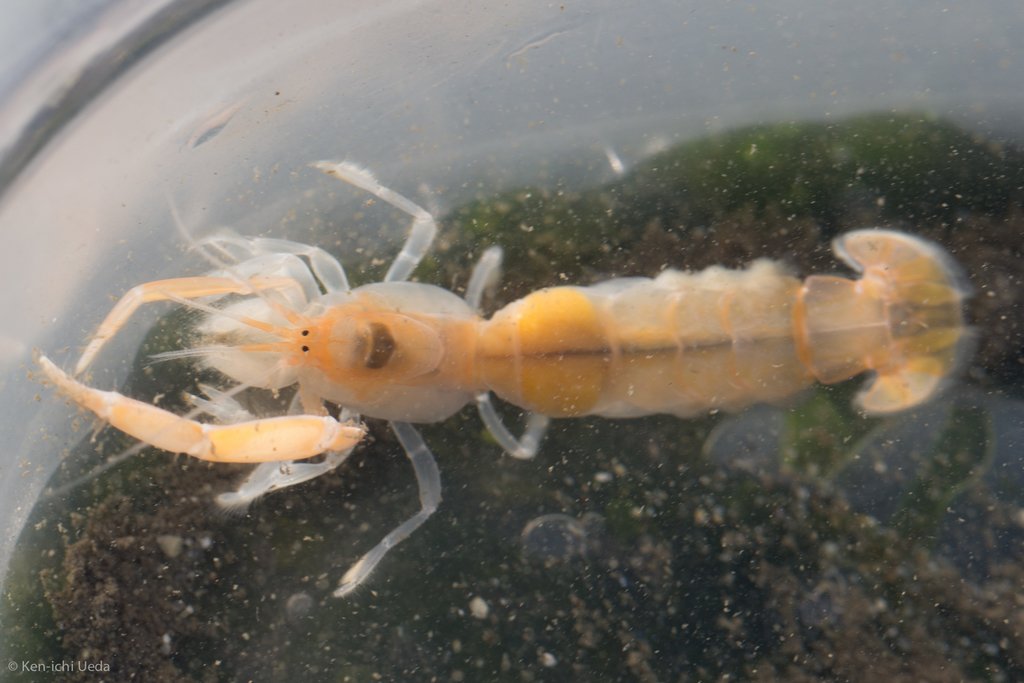
Ghost Shrimp
Neotrypaea californiensis
Identify Ghost Shrimp (Neotrypaea californiensis) from a photo: try it free in your browser, or get unlimited IDs, no sign-up, with the CatchRules app. Plus current fishing rules across 4 jurisdictions.
At a glance
Ghost Shrimp (Neotrypaea californiensis) is an invertebrate regulated in 5 of 66 jurisdictions tracked by CatchRules across the U.S. and Canada.
The strictest bag limit is 20 (Texas); the most generous is 50 (British Columbia).
Confirmed by 550 research-grade iNaturalist observations, with British Columbia, Washington, and California the top jurisdictions by observation count.
Notable details
- Excavates burrows up to 3 feet deep in Pacific coast mudflats.
- Its semi-translucent body gives it the ghostly appearance behind its common name.
- One of the most prized live baits for sturgeon fishing on the West Coast.
- Dense populations can destabilize sediments and damage oyster aquaculture beds.
- Its burrowing aerates intertidal sediment, playing a key ecological role in mudflats.
Where Ghost Shrimp are seen
Jurisdictions with rules for Ghost Shrimp
Background
Neotrypaea californiensis (formerly Callianassa californiensis), the Bay ghost shrimp, is a species of ghost shrimp that lives on the Pacific coast of North America. It is a pale animal which grows to a length of 11.5 cm (4.5 in). One claw is bigger than the other, especially in males, and the enlarged claw is thought to have a function in mating. N. californiensis is a deposit feeder that lives…
Background excerpt adapted from Wikipedia's Ghost Shrimp article (CC BY-SA). Visit Wikipedia for the full entry.
Other invertebrates on CatchRules
Frequently asked questions
What is Ghost Shrimp?
Ghost Shrimp (Neotrypaea californiensis) is an invertebrate regulated in 5 of 66 jurisdictions tracked by CatchRules across the U.S. and Canada.
What is the scientific name for Ghost Shrimp?
Ghost Shrimp is Neotrypaea californiensis.
Is Ghost Shrimp regulated for fishing?
Yes — Ghost Shrimp has fishing regulations in 4 U.S. states and/or Canadian provinces tracked by CatchRules. See the "Jurisdictions with rules" section above for the binding-source links.
How can I identify Ghost Shrimp?
Take a photo with the free CatchRules app for iPhone or Android — on-device identification recognizes Ghost Shrimp along with ~1,500 other species. No sign-up, unlimited use.
Photo credit: iNaturalist / Wikipedia. Identification reference only — verify regulations with the issuing wildlife agency before retaining a catch.