
Species profile
Giant Kelp
Macrocystis pyrifera
Identify Giant Kelp (Macrocystis pyrifera) from a photo: try it free in your browser, or get unlimited IDs, no sign-up, with the CatchRules app. Plus current fishing rules across 2 jurisdictions.
At a glance
Giant Kelp (Macrocystis pyrifera) is a marine alga regulated in 3 of 66 jurisdictions tracked by CatchRules across the U.S. and Canada.
The strictest bag limit is 1 (Oregon); the most generous is 10 (California).
Confirmed by 12,134 research-grade iNaturalist observations, with California, British Columbia, and Washington the top jurisdictions by observation count.
Notable details
- Can grow up to 60 cm (2 feet) per day, making it one of Earth's fastest-growing organisms.
- Individual plants can reach 45 meters (150 feet) from the seafloor to the surface.
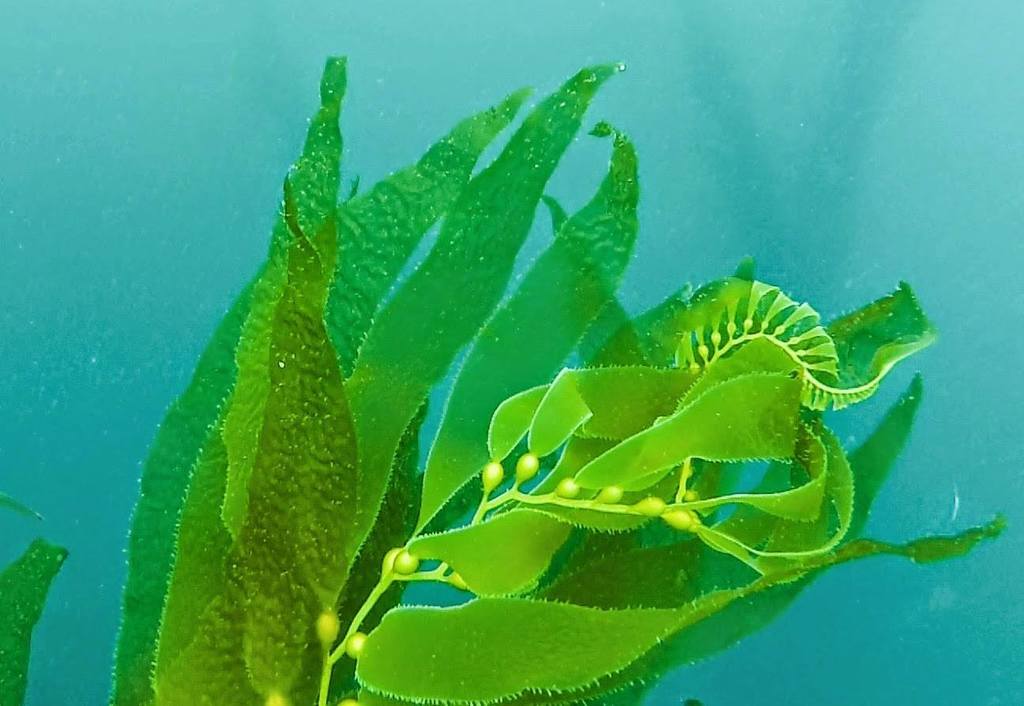
- Gas-filled bladders called pneumatocysts keep each frond buoyant and oriented toward sunlight.
- Kelp forests along the Pacific coast shelter hundreds of fish and invertebrate species.
- Not a true plant but a brown alga, more closely related to diatoms than to land plants.
Where Giant Kelp are seen
Jurisdictions with rules for Giant Kelp
Background
Macrocystis is a monospecific genus of kelp with all species now synonymous with Macrocystis pyrifera. It is commonly known as giant kelp or bladder kelp. This genus contains the largest of all the Phaeophyceae or brown algae. Macrocystis has pneumatocysts at the base of its blades. Sporophytes are perennial and the individual may live for up to three years; stipes/fronds within a whole…
Background excerpt adapted from Wikipedia's Giant Kelp article (CC BY-SA). Visit Wikipedia for the full entry.
Other brown algae/kelps on CatchRules
Frequently asked questions
What is Giant Kelp?
Giant Kelp (Macrocystis pyrifera) is a marine alga regulated in 3 of 66 jurisdictions tracked by CatchRules across the U.S. and Canada.
What is the scientific name for Giant Kelp?
Giant Kelp is Macrocystis pyrifera.
Is Giant Kelp regulated for fishing?
Yes — Giant Kelp has fishing regulations in 2 U.S. states and/or Canadian provinces tracked by CatchRules. See the "Jurisdictions with rules" section above for the binding-source links.
How can I identify Giant Kelp?
Take a photo with the free CatchRules app for iPhone or Android — on-device identification recognizes Giant Kelp along with ~1,500 other species. No sign-up, unlimited use.
Photo credit: iNaturalist / Wikipedia. Identification reference only — verify regulations with the issuing wildlife agency before retaining a catch.