
Species profile
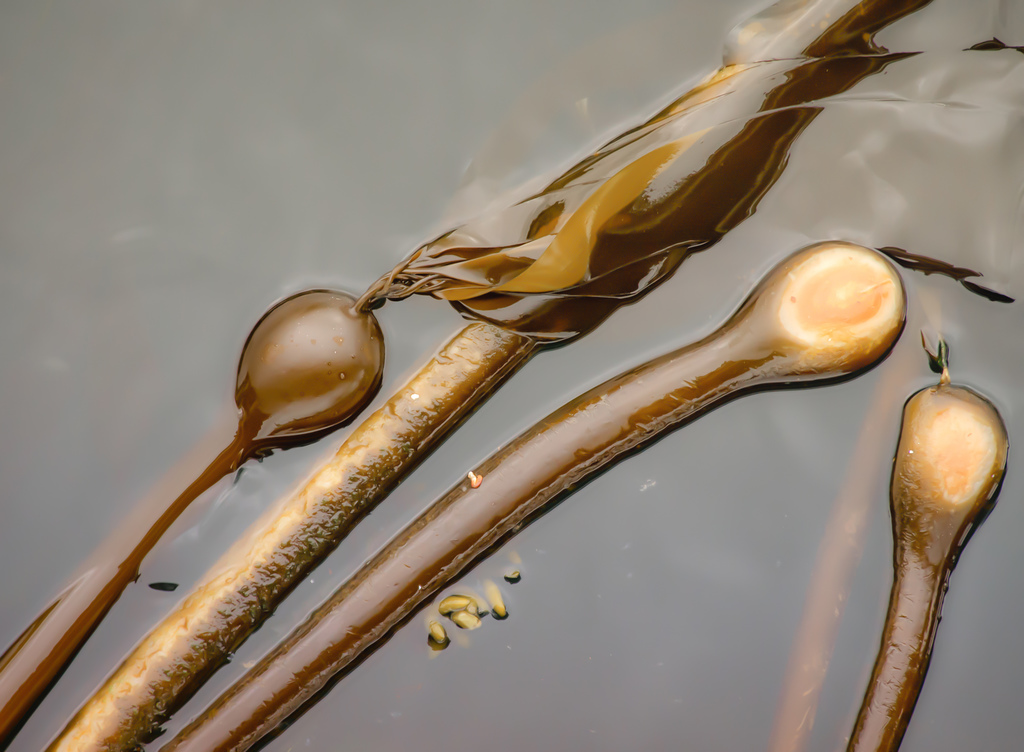
Bull Kelp
Nereocystis luetkeana
Identify Bull Kelp (Nereocystis luetkeana) from a photo: try it free in your browser, or get unlimited IDs, no sign-up, with the CatchRules app. Plus current fishing rules across 3 jurisdictions.
At a glance
Bull Kelp (Nereocystis luetkeana) is a marine alga regulated in 4 of 66 jurisdictions tracked by CatchRules across the U.S. and Canada.
The strictest bag limit is 1 (Oregon); the most generous is 10 (California).
Confirmed by 13,657 research-grade iNaturalist observations, with British Columbia, California, and Washington the top jurisdictions by observation count.
Notable details
- Can grow up to 4 inches (10 cm) in a single day during peak season.
- It is an annual species, completing its entire life cycle within one year.
- The hollow, gas-filled bulb at its tip keeps the leaf canopy floating at the surface.
- Can reach total lengths of over 100 feet (30 meters) from holdfast to canopy tip.
- Forms dense underwater forests from Alaska to central California.
Where Bull Kelp are seen
Jurisdictions with rules for Bull Kelp
Background
Nereocystis (Greek for "mermaid's bladder") is a monotypic genus of subtidal kelp containing the species Nereocystis luetkeana. Some English names include edible kelp, bull kelp, bullwhip kelp, ribbon kelp, bladder wrack, and variations of these names. Due to the English name, bull kelp can be confused with southern bull kelps, which are found in the Southern Hemisphere. Nereocystis luetkeana…
Background excerpt adapted from Wikipedia's Bull Kelp article (CC BY-SA). Visit Wikipedia for the full entry.
Other brown algae/kelps on CatchRules
Frequently asked questions
What is Bull Kelp?
Bull Kelp (Nereocystis luetkeana) is a marine alga regulated in 4 of 66 jurisdictions tracked by CatchRules across the U.S. and Canada.
What is the scientific name for Bull Kelp?
Bull Kelp is Nereocystis luetkeana.
Is Bull Kelp regulated for fishing?
Yes — Bull Kelp has fishing regulations in 3 U.S. states and/or Canadian provinces tracked by CatchRules. See the "Jurisdictions with rules" section above for the binding-source links.
How can I identify Bull Kelp?
Take a photo with the free CatchRules app for iPhone or Android — on-device identification recognizes Bull Kelp along with ~1,500 other species. No sign-up, unlimited use.
Photo credit: iNaturalist / Wikipedia. Identification reference only — verify regulations with the issuing wildlife agency before retaining a catch.