
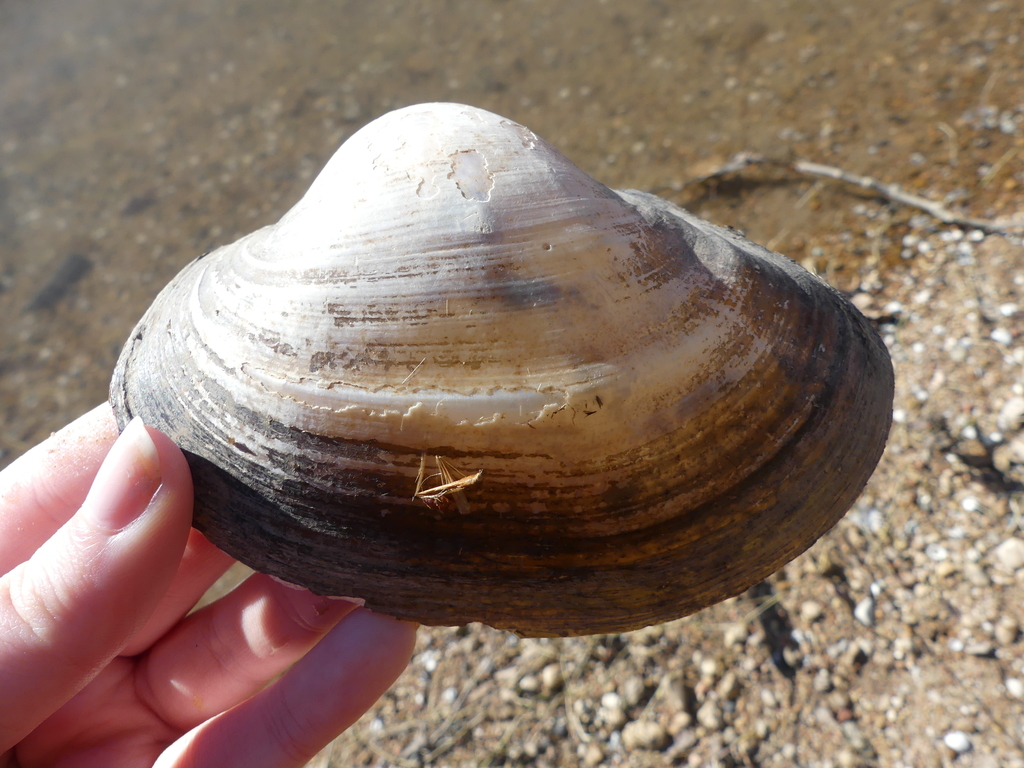
Species profile
Giant Floater
Pyganodon grandis
At a glance
Giant Floater (Pyganodon grandis) is an IUCN Least Concern bivalve mollusk regulated in 6 of 66 jurisdictions tracked by CatchRules across the U.S. and Canada.
The strictest bag limit is 5 (Missouri); the most generous is 25 (Texas).
Confirmed by 7,986 research-grade iNaturalist observations, with Ontario, Texas, and Manitoba the top jurisdictions by observation count.
Notable details
- One of the largest freshwater mussels in North America, with shells reaching up to 30 centimeters (12 inches).
- Despite its size, the shell is unusually thin and lightweight — the 'floater' name comes from how empty shells drift on water.
- Widely distributed across lakes and slow rivers from the Great Plains east to the Atlantic coast.
- Like all unionid mussels, its larvae parasitize host fish gills before dropping off as juveniles.
- Can live 10–15 years and actively filters fine particles and algae from the water column.
Where Giant Floater are seen
Jurisdictions with rules for Giant Floater
Background
Pyganodon grandis (giant floater) is a species of freshwater mussel, an aquatic bivalve mollusk in the family Unionidae, the river mussels. This species is fast-growing, large, and has a short lifespan.
Background excerpt adapted from Wikipedia's Giant Floater article (CC BY-SA). Visit Wikipedia for the full entry.
Other clams/oysters/mussels on CatchRules
Photo credit: iNaturalist / Wikipedia. Identification reference only — verify regulations with the issuing wildlife agency before retaining a catch.