
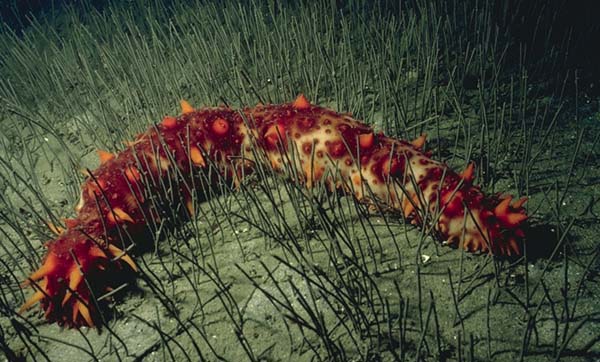
Species profile
giant California sea cucumber
Apostichopus californicus
Identify giant California sea cucumber (Apostichopus californicus) from a photo — free, unlimited, no sign-up — with the CatchRules iPhone app. Plus current fishing rules across 4 jurisdictions.
At a glance
giant California sea cucumber (Apostichopus californicus) is an IUCN Least Concern echinoderm regulated in 4 of 66 jurisdictions tracked by CatchRules across the U.S. and Canada.
The strictest bag limit is 10 (Hawaii); the most generous is 20 (Hawaii).
Confirmed by 3,904 research-grade iNaturalist observations, with British Columbia, Washington, and Alaska the top jurisdictions by observation count.
Notable details
- One of the largest sea cucumbers on the Pacific coast, stretching up to 50 cm when extended.
- When threatened, it eviserates — expelling its internal organs — and can regrow them afterward.
- Ranges from the Aleutian Islands, Alaska, all the way south to Baja California.
- Nocturnal and solitary, spending days tucked under rocks or in crevices.
- Supports a commercial fishery in California and Alaska, prized in Asian seafood markets.
Where giant California sea cucumber are seen
Jurisdictions with rules for giant California sea cucumber
Background
The California sea cucumber, also known as the giant California sea cucumber, is a sea cucumber that can be found from the Gulf of Alaska to Baja California. It is found from the low intertidal zone to a depth of 250 m (820 ft). They are most abundant in areas with moderate current with cobbles, boulders or bedrock. They are artisanally fished.
Background excerpt adapted from Wikipedia's giant California sea cucumber article (CC BY-SA). Visit Wikipedia for the full entry.
Other starfish/urchins/cucumbers on CatchRules
Frequently asked questions
What is giant California sea cucumber?
giant California sea cucumber (Apostichopus californicus) is an IUCN Least Concern echinoderm regulated in 4 of 66 jurisdictions tracked by CatchRules across the U.S. and Canada.
What is the scientific name for giant California sea cucumber?
giant California sea cucumber is Apostichopus californicus.
Is giant California sea cucumber regulated for fishing?
Yes — giant California sea cucumber has fishing regulations in 4 U.S. states and/or Canadian provinces tracked by CatchRules. See the "Jurisdictions with rules" section above for the binding-source links.
How can I identify giant California sea cucumber?
Take a photo with the free CatchRules iPhone app — on-device identification recognizes giant California sea cucumber along with ~1,500 other species. No sign-up, unlimited use.
Photo credit: iNaturalist / Wikipedia. Identification reference only — verify regulations with the issuing wildlife agency before retaining a catch.