
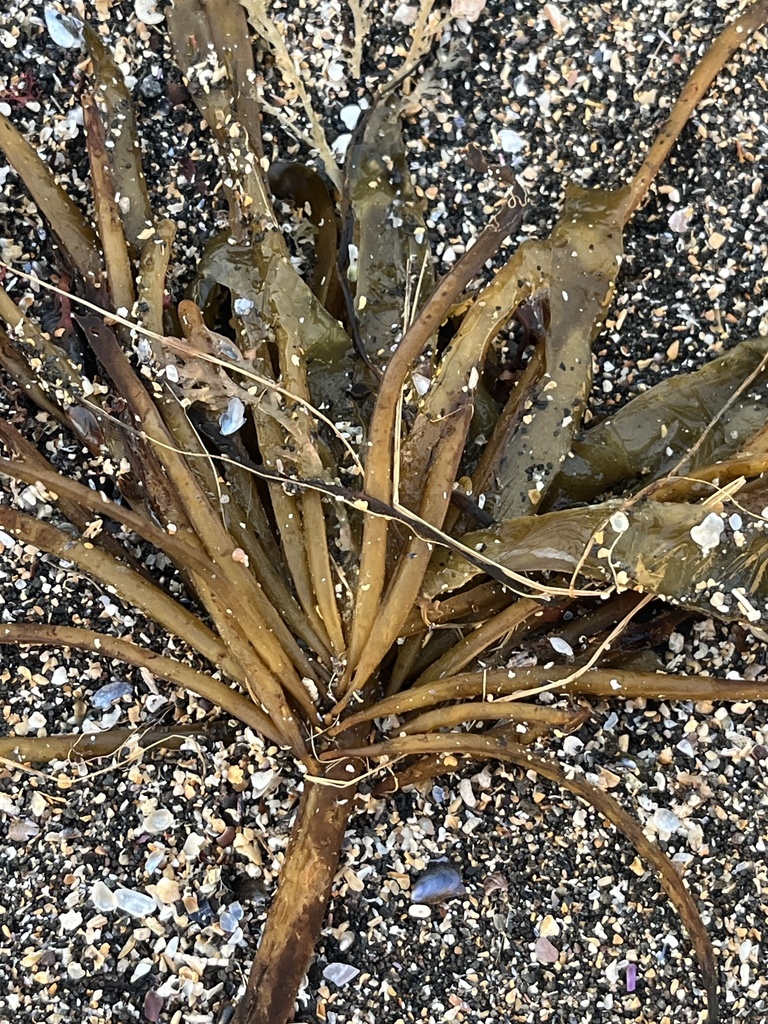
Species profile
Dabberlocks
Alaria esculenta
Identify Dabberlocks (Alaria esculenta) from a photo: try it free in your browser, or get unlimited IDs, no sign-up, with the CatchRules app. Plus current fishing rules across 1 jurisdiction.
At a glance
Dabberlocks (Alaria esculenta) is a marine alga with specific harvest rules tracked in 1 of 66 jurisdictions covered by CatchRules.
Confirmed by 148 research-grade iNaturalist observations, with Quebec, Maine, and Newfoundland and Labrador the top jurisdictions by observation count.
Notable details
- Dabberlocks has been eaten for centuries in Iceland, Scotland, and Ireland, often dried or cooked in soups.
- It can grow up to 2 meters long in cold, current-swept Atlantic waters.
- A tough central midrib runs the length of its blade, providing structural support in surge.
Where Dabberlocks are seen
Jurisdictions with rules for Dabberlocks
Background
Alaria esculenta is an edible seaweed, also known as dabberlocks or badderlocks, or winged kelp. It is a traditional food along the coasts of the far north Atlantic Ocean. It may be eaten fresh or cooked in Greenland, Iceland, Scotland and Ireland. It is the only one of twelve species of Alaria to occur in both Ireland and in Great Britain.
Background excerpt adapted from Wikipedia's Dabberlocks article (CC BY-SA). Visit Wikipedia for the full entry.
Other brown algae/kelps on CatchRules
Frequently asked questions
What is Dabberlocks?
Dabberlocks (Alaria esculenta) is a marine alga with specific harvest rules tracked in 1 of 66 jurisdictions covered by CatchRules.
What is the scientific name for Dabberlocks?
Dabberlocks is Alaria esculenta.
Is Dabberlocks regulated for fishing?
Yes — Dabberlocks has fishing regulations in 1 U.S. state and/or Canadian province tracked by CatchRules. See the "Jurisdictions with rules" section above for the binding-source links.
How can I identify Dabberlocks?
Take a photo with the free CatchRules app for iPhone or Android — on-device identification recognizes Dabberlocks along with ~1,500 other species. No sign-up, unlimited use.
Photo credit: iNaturalist / Wikipedia. Identification reference only — verify regulations with the issuing wildlife agency before retaining a catch.