
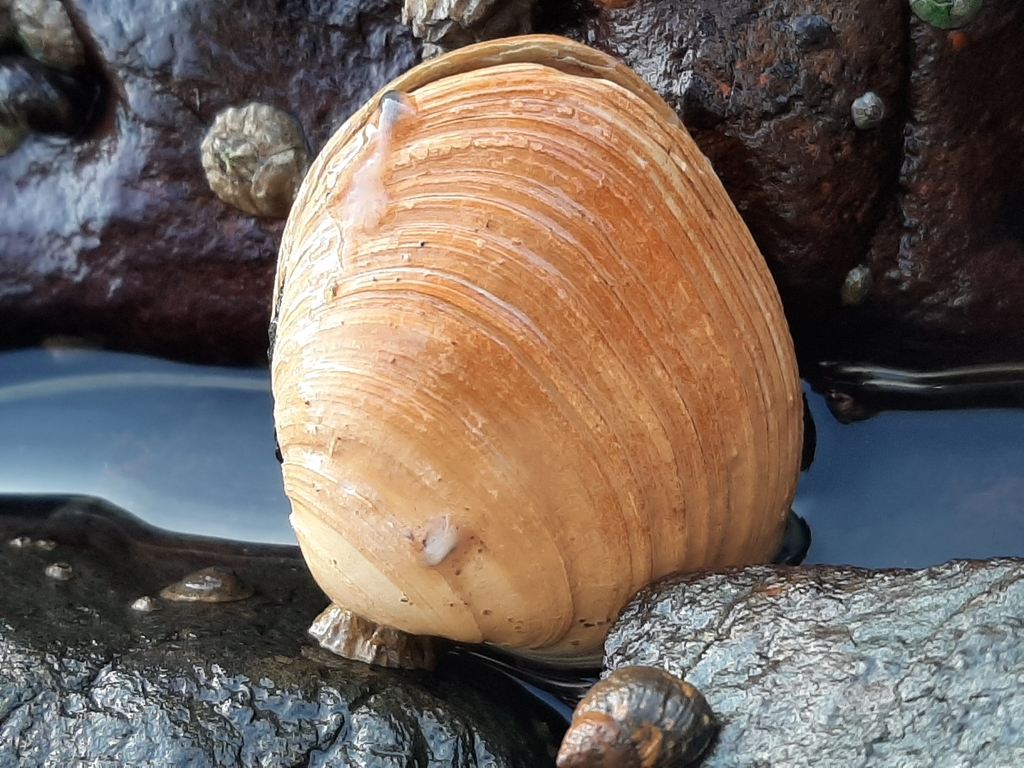
Species profile
Butter Clam
Saxidomus gigantea
Identify Butter Clam (Saxidomus gigantea) from a photo: try it free in your browser, or get unlimited IDs, no sign-up, with the CatchRules app. Plus current fishing rules across 2 jurisdictions.
At a glance
Butter Clam (Saxidomus gigantea) is a bivalve mollusk regulated in 3 of 66 jurisdictions tracked by CatchRules across the U.S. and Canada.
The strictest bag limit is 20 (Oregon); the most generous is 40 (Alaska).
Confirmed by 1,462 research-grade iNaturalist observations, with British Columbia, Washington, and Alaska the top jurisdictions by observation count.
Notable details
- One of the longest-lived Pacific clams, butter clams can survive for more than 20 years.
- Shells can reach 5 inches (13 cm) wide, making them one of the larger Pacific coast clams.
- They can retain paralytic shellfish toxins (PSP) for years after a bloom ends, making them potentially dangerous.
- Butter clams burrow up to 30 cm deep in gravel and sandy-gravel beaches.
- They were a critical food source for Indigenous peoples throughout the Pacific Northwest coast.
Where Butter Clam are seen
Jurisdictions with rules for Butter Clam
Background
Saxidomus gigantea is a large, edible saltwater clam, a marine bivalve mollusk in the family Veneridae, the venus clams. It can be found along the western coast of North America, ranging from the Aleutian Islands to San Francisco Bay. Common names for this clam include butter clam, Washington clam, smooth Washington clam and money shell.
Background excerpt adapted from Wikipedia's Butter Clam article (CC BY-SA). Visit Wikipedia for the full entry.
Other clams/oysters/mussels on CatchRules
Frequently asked questions
What is Butter Clam?
Butter Clam (Saxidomus gigantea) is a bivalve mollusk regulated in 3 of 66 jurisdictions tracked by CatchRules across the U.S. and Canada.
What is the scientific name for Butter Clam?
Butter Clam is Saxidomus gigantea.
Is Butter Clam regulated for fishing?
Yes — Butter Clam has fishing regulations in 2 U.S. states and/or Canadian provinces tracked by CatchRules. See the "Jurisdictions with rules" section above for the binding-source links.
How can I identify Butter Clam?
Take a photo with the free CatchRules app for iPhone or Android — on-device identification recognizes Butter Clam along with ~1,500 other species. No sign-up, unlimited use.
Photo credit: iNaturalist / Wikipedia. Identification reference only — verify regulations with the issuing wildlife agency before retaining a catch.