
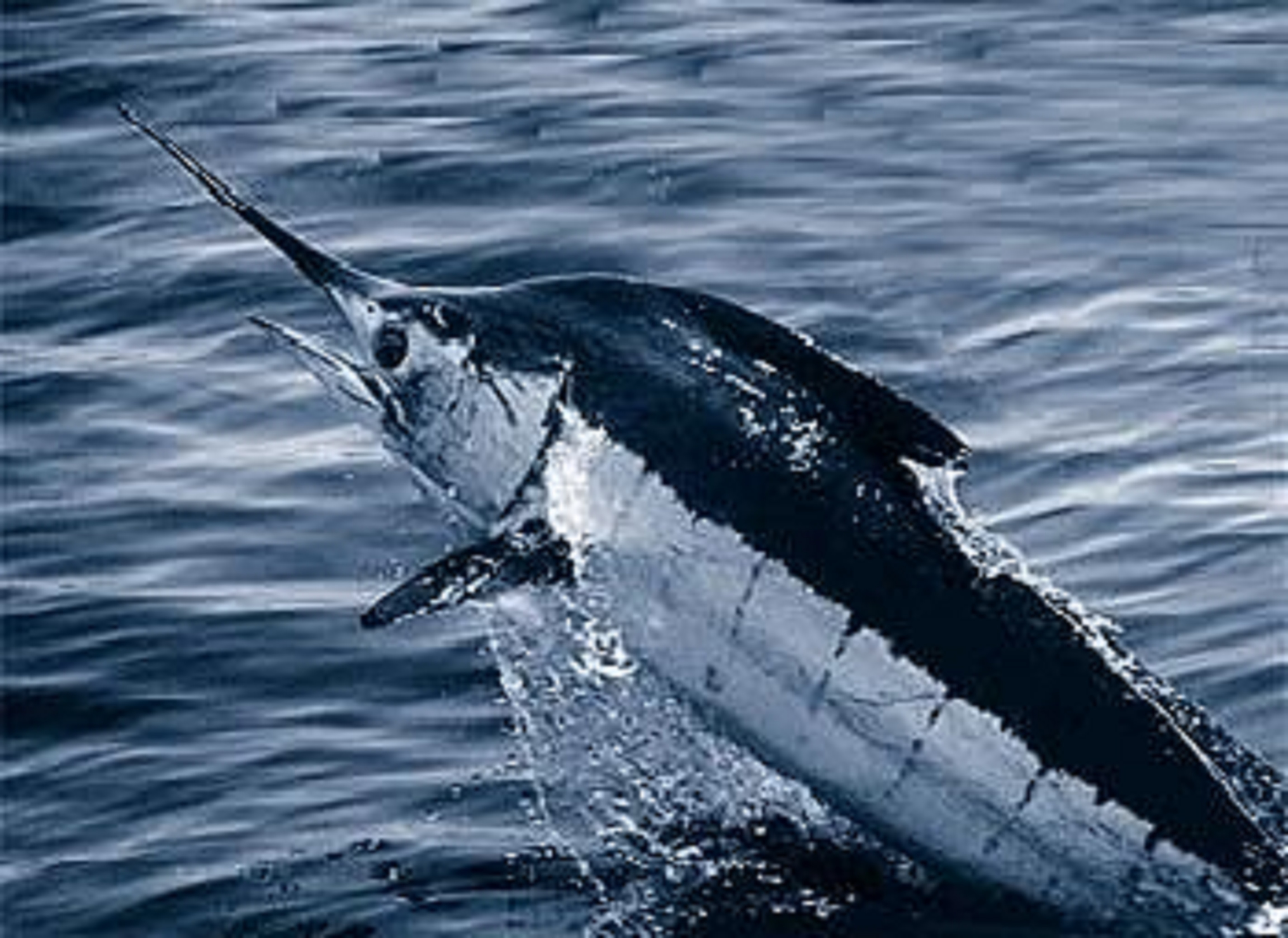
Species profile
Blue Marlin
Makaira nigricans
Identify Blue Marlin (Makaira nigricans) from a photo: try it free in your browser, or get unlimited IDs, no sign-up, with the CatchRules app. Plus current fishing rules across 4 jurisdictions.
At a glance
Blue Marlin (Makaira nigricans) is an IUCN Vulnerable bony-fish species regulated in 6 of 66 jurisdictions tracked by CatchRules across the U.S. and Canada.
Bag limits are uniform at 1 per angler across the 3 regulating jurisdictions.
Across 3 jurisdictions with stated minimum sizes, the average minimum is 98.7 in (≈ 8 ft 3 in).
Confirmed by 12 research-grade iNaturalist observations, with Hawaii, Florida, and Mississippi the top jurisdictions by observation count.
Notable details
- Females can reach 14 feet (4.3 m) long and exceed 1,400 lbs (635 kg).
- Males rarely top 300 lbs (136 kg), making females up to five times heavier.
- Uses its long, spear-like bill to slash through schools of baitfish before circling back to eat.
- Highly migratory, tracking warm ocean currents across entire ocean basins throughout the year.
- Keeps its brain and eyes warmer than surrounding seawater using a specialized counter-current heat exchanger.
Where Blue Marlin are seen
Jurisdictions with rules for Blue Marlin
Background
The Atlantic blue marlin (Makaira nigricans) is a species of marlin endemic to the Atlantic Ocean. It is closely related to, and usually considered conspecific with, the Indo-Pacific blue marlin, then simply called blue marlin. Some authorities still consider both species distinct.
Background excerpt adapted from Wikipedia's Blue Marlin article (CC BY-SA). Visit Wikipedia for the full entry.
Other bony fish on CatchRules
Frequently asked questions
What is Blue Marlin?
Blue Marlin (Makaira nigricans) is an IUCN Vulnerable bony-fish species regulated in 6 of 66 jurisdictions tracked by CatchRules across the U.S. and Canada.
What is the scientific name for Blue Marlin?
Blue Marlin is Makaira nigricans.
Is Blue Marlin regulated for fishing?
Yes — Blue Marlin has fishing regulations in 4 U.S. states and/or Canadian provinces tracked by CatchRules. See the "Jurisdictions with rules" section above for the binding-source links.
How can I identify Blue Marlin?
Take a photo with the free CatchRules app for iPhone or Android — on-device identification recognizes Blue Marlin along with ~1,500 other species. No sign-up, unlimited use.
Photo credit: iNaturalist / Wikipedia. Identification reference only — verify regulations with the issuing wildlife agency before retaining a catch.