
Species profile
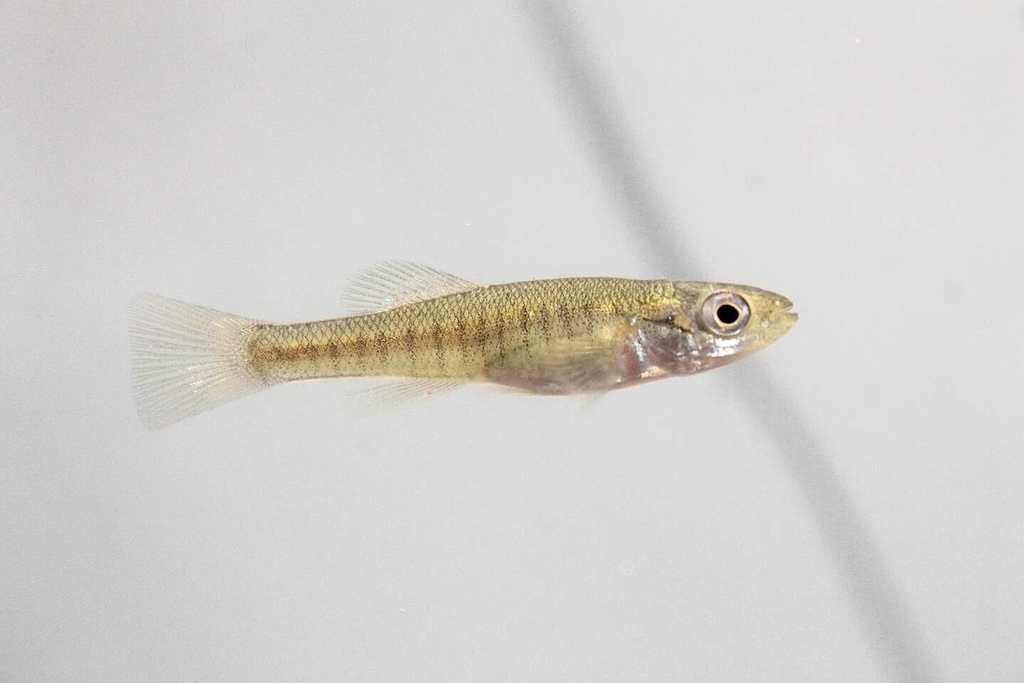
Banded Killifish
Fundulus diaphanus
Identify Banded Killifish (Fundulus diaphanus) from a photo: try it free in your browser, or get unlimited IDs, no sign-up, with the CatchRules app. Plus current fishing rules across 2 jurisdictions.
At a glance
Banded Killifish (Fundulus diaphanus) is an IUCN Least Concern bony-fish species regulated in 2 of 66 jurisdictions tracked by CatchRules across the U.S. and Canada.
Confirmed by 3,322 research-grade iNaturalist observations, with Nova Scotia, Ontario, and New Jersey the top jurisdictions by observation count.
Listed under SARA — verify protected-species rules with the issuing agency before retaining or handling.
Notable details
- Males display 12–20 narrow vertical dark bands along their sides, the source of the common name.
- Grows to about 10 cm (4 inches), making it one of the larger killifish in eastern North America.
- Ranges from Newfoundland south to South Carolina in freshwater streams, ponds, and lakes.
- Tolerates a wide salinity range and can survive in mildly brackish coastal waters.
- An opportunistic omnivore that eats insects, crustaceans, small fish, and aquatic plant matter.
Where Banded Killifish are seen
Jurisdictions with rules for Banded Killifish
Protected status
- SARA Schedule 1 (special concern): Banded Killifish. Canadian populations — harm/harvest prohibited under SARA s.32-33.
Always verify protected-species rules with the issuing agency before retaining or handling.
Background
The banded killifish (Fundulus diaphanus) is a North American species of temperate freshwater killifish belonging to the Fundulus genus of the Fundulidae family. The natural geographic range extends from Newfoundland to South Carolina, and west to Minnesota. It includes the Great Lakes drainages. The banded killifish is the only freshwater killifish found in the northeastern United States. While…
Background excerpt adapted from Wikipedia's Banded Killifish article (CC BY-SA). Visit Wikipedia for the full entry.
Other bony fish on CatchRules
Frequently asked questions
What is Banded Killifish?
Banded Killifish (Fundulus diaphanus) is an IUCN Least Concern bony-fish species regulated in 2 of 66 jurisdictions tracked by CatchRules across the U.S. and Canada.
What is the scientific name for Banded Killifish?
Banded Killifish is Fundulus diaphanus.
Is Banded Killifish regulated for fishing?
Yes — Banded Killifish has fishing regulations in 2 U.S. states and/or Canadian provinces tracked by CatchRules. See the "Jurisdictions with rules" section above for the binding-source links.
How can I identify Banded Killifish?
Take a photo with the free CatchRules app for iPhone or Android — on-device identification recognizes Banded Killifish along with ~1,500 other species. No sign-up, unlimited use.
Photo credit: iNaturalist / Wikipedia. Identification reference only — verify regulations with the issuing wildlife agency before retaining a catch.