
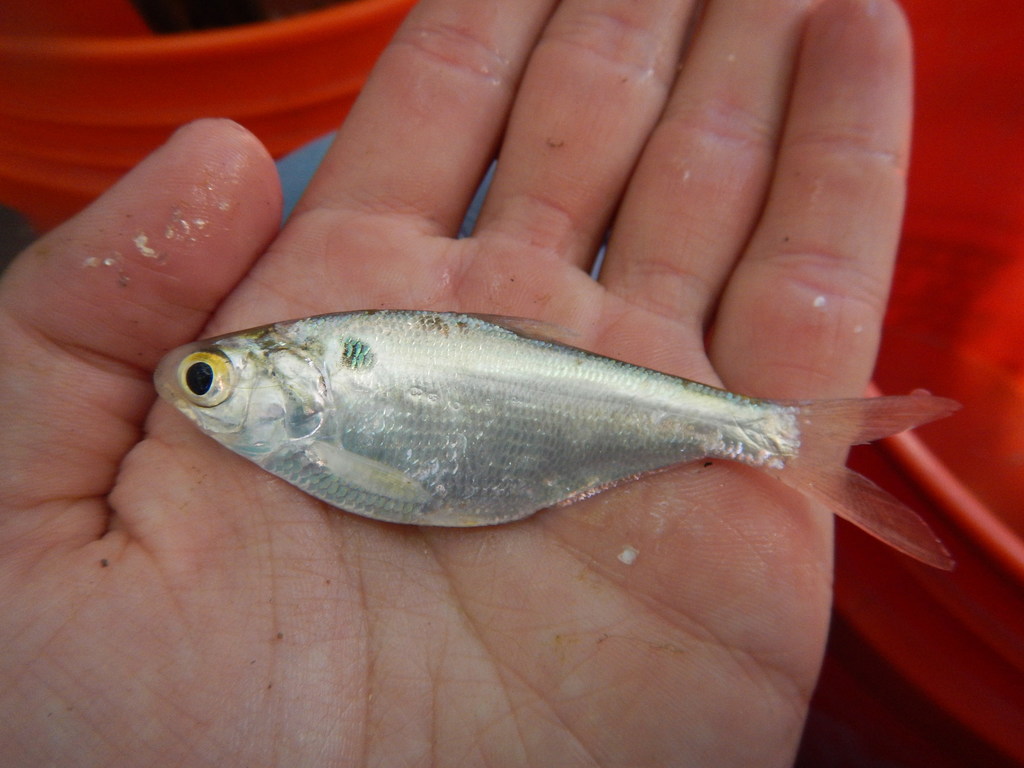
Species profile
American Gizzard Shad
Dorosoma cepedianum
Identify American Gizzard Shad (Dorosoma cepedianum) from a photo — free, unlimited, no sign-up — with the CatchRules iPhone app. Plus current fishing rules across 11 jurisdictions.
At a glance
American Gizzard Shad (Dorosoma cepedianum) is an IUCN Least Concern bony-fish species regulated in 12 of 66 jurisdictions tracked by CatchRules across the U.S. and Canada.
The strictest bag limit is 35 (New Jersey); the most generous is 50 (Maryland).
Confirmed by 4,864 research-grade iNaturalist observations, with Texas, Ohio, and Ontario the top jurisdictions by observation count.
Notable details
- Named for its muscular, gizzard-like stomach that grinds algae and detritus much like a bird's gizzard.
- Adults filter phytoplankton and organic particles through fine gill rakers rather than chasing prey.
- Can grow up to 18 inches long, making it the largest member of the genus Dorosoma.
- A critical forage fish fueling populations of striped bass, largemouth bass, and catfish.
- Its dorsal fin ends in a long, whip-like filament that extends well past the other fin rays.
Where American Gizzard Shad are seen
Jurisdictions with rules for American Gizzard Shad
Background
The American gizzard shad, also known as the mud shad, is a member of the herring family of fish and is native to large swaths of fresh and brackish waters in the United States of America, as well as portions of Canada, and Mexico. The adult has a deep body, with a silvery-green coloration above fading to plain silver below.
Background excerpt adapted from Wikipedia's American Gizzard Shad article (CC BY-SA). Visit Wikipedia for the full entry.
Other bony fish on CatchRules
Frequently asked questions
What is American Gizzard Shad?
American Gizzard Shad (Dorosoma cepedianum) is an IUCN Least Concern bony-fish species regulated in 12 of 66 jurisdictions tracked by CatchRules across the U.S. and Canada.
What is the scientific name for American Gizzard Shad?
American Gizzard Shad is Dorosoma cepedianum.
Is American Gizzard Shad regulated for fishing?
Yes — American Gizzard Shad has fishing regulations in 11 U.S. states and/or Canadian provinces tracked by CatchRules. See the "Jurisdictions with rules" section above for the binding-source links.
How can I identify American Gizzard Shad?
Take a photo with the free CatchRules iPhone app — on-device identification recognizes American Gizzard Shad along with ~1,500 other species. No sign-up, unlimited use.
Photo credit: iNaturalist / Wikipedia. Identification reference only — verify regulations with the issuing wildlife agency before retaining a catch.