
Species profile
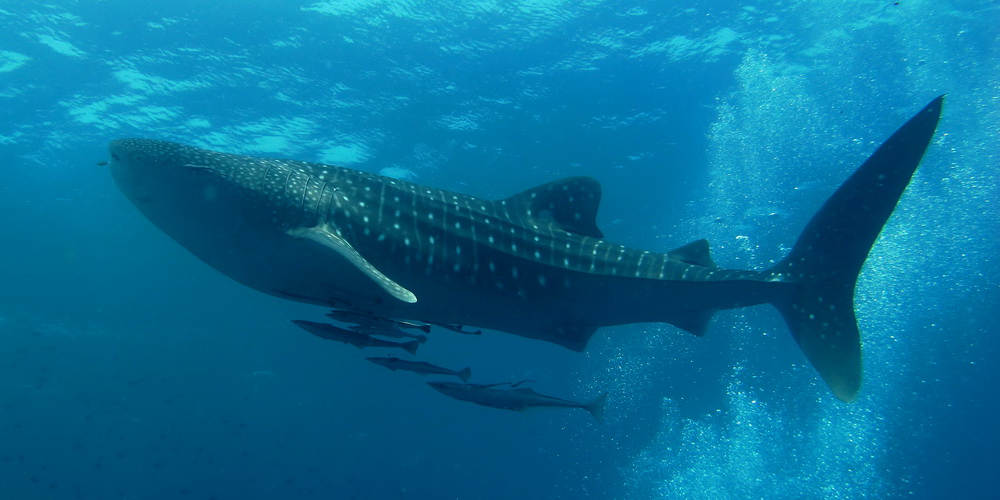
Whale Shark
Rhincodon typus
Identify Whale Shark (Rhincodon typus) from a photo: try it free in your browser, or get unlimited IDs, no sign-up, with the CatchRules app. Plus current fishing rules across 2 jurisdictions.
At a glance
Whale Shark (Rhincodon typus) is an IUCN Endangered shark or ray regulated in 3 of 66 jurisdictions tracked by CatchRules across the U.S. and Canada.
Confirmed by 15 research-grade iNaturalist observations, with Hawaii, Florida, and California the top jurisdictions by observation count.
Listed under MSA and CITES — verify protected-species rules with the issuing agency before retaining or handling.
Notable details
- The whale shark is the world's largest fish, reaching up to 40 feet in length.
- Despite its massive size, it feeds entirely by filter-feeding on plankton and fish eggs.
- Its mouth spans nearly 5 feet wide, lined with thousands of tiny, non-functional teeth.
- Each whale shark's spot pattern is unique, like a human fingerprint.
- Scientists estimate whale sharks can live over 70 years.
Where Whale Shark are seen
Jurisdictions with rules for Whale Shark
Protected status
- Atlantic HMS prohibited.
- CITES Appendix II (Whale shark). CoP12 (2003).
Always verify protected-species rules with the issuing agency before retaining or handling.
Background
The whale shark is a slow-moving, filter-feeding carpet shark and the largest known extant fish species. An individual with a length of 18.8 m (61.7 ft) has been considered the largest reliably recorded. The whale shark holds many records for size in the animal kingdom, most notably being by far the most massive living non-cetacean animal.
Background excerpt adapted from Wikipedia's Whale Shark article (CC BY-SA). Visit Wikipedia for the full entry.
Other sharks & rays on CatchRules
Frequently asked questions
What is Whale Shark?
Whale Shark (Rhincodon typus) is an IUCN Endangered shark or ray regulated in 3 of 66 jurisdictions tracked by CatchRules across the U.S. and Canada.
What is the scientific name for Whale Shark?
Whale Shark is Rhincodon typus.
Is Whale Shark regulated for fishing?
Yes — Whale Shark has fishing regulations in 2 U.S. states and/or Canadian provinces tracked by CatchRules. See the "Jurisdictions with rules" section above for the binding-source links.
How can I identify Whale Shark?
Take a photo with the free CatchRules app for iPhone or Android — on-device identification recognizes Whale Shark along with ~1,500 other species. No sign-up, unlimited use.
Photo credit: iNaturalist / Wikipedia. Identification reference only — verify regulations with the issuing wildlife agency before retaining a catch.