
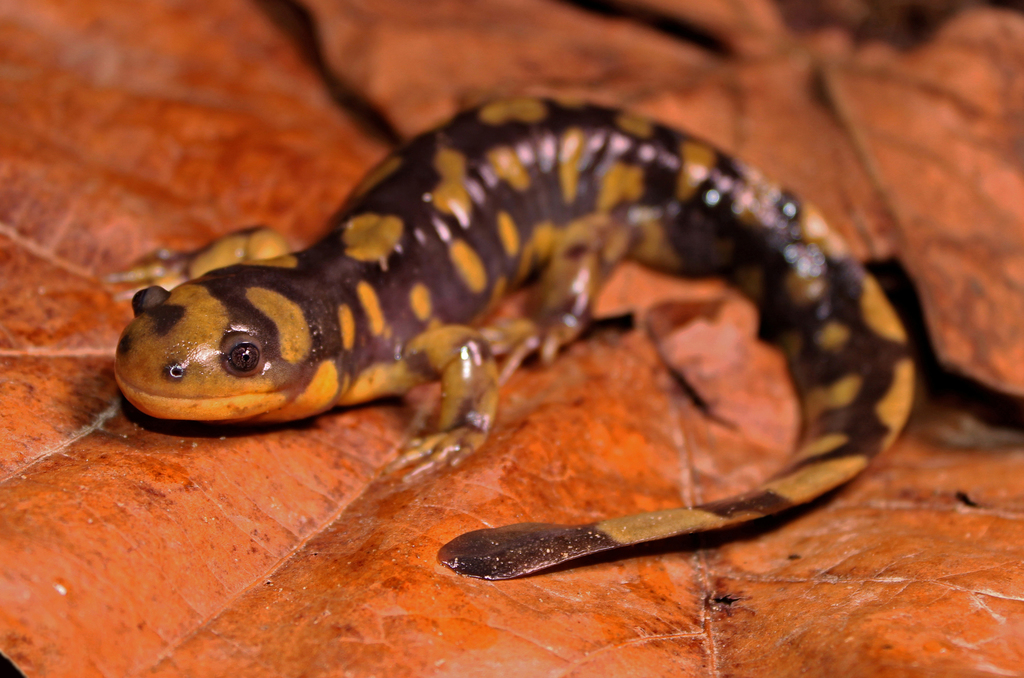
Species profile
Salamander
Ambystoma tigrinum
Identify Salamander (Ambystoma tigrinum) from a photo — free, unlimited, no sign-up — with the CatchRules iPhone app. Plus current fishing rules across 6 jurisdictions.
At a glance
Salamander (Ambystoma tigrinum) is an IUCN Least Concern amphibian regulated in 7 of 66 jurisdictions tracked by CatchRules across the U.S. and Canada.
The strictest bag limit is 4 (California); the most generous is 50 (North Dakota).
Confirmed by 2,337 research-grade iNaturalist observations, with Minnesota, Illinois, and Wisconsin the top jurisdictions by observation count.
Notable details
- Tiger salamanders are the largest land-dwelling salamanders in North America, reaching up to 14 inches.
- Their aquatic larvae, called waterdogs, are widely sold as live bait for bass and walleye.
- Adults spend most of their lives underground, typically occupying burrows dug by other animals.
- Some populations are permanently neotenic, retaining gills and staying aquatic their whole lives.
- They can live up to 25 years in captivity.
Where Salamander are seen
Jurisdictions with rules for Salamander
Background
The tiger salamander or eastern tiger salamander (Ambystoma tigrinum) is a North American species of mole salamander.
Background excerpt adapted from Wikipedia's Salamander article (CC BY-SA). Visit Wikipedia for the full entry.
Other amphibians on CatchRules
Frequently asked questions
What is Salamander?
Salamander (Ambystoma tigrinum) is an IUCN Least Concern amphibian regulated in 7 of 66 jurisdictions tracked by CatchRules across the U.S. and Canada.
What is the scientific name for Salamander?
Salamander is Ambystoma tigrinum.
Is Salamander regulated for fishing?
Yes — Salamander has fishing regulations in 6 U.S. states and/or Canadian provinces tracked by CatchRules. See the "Jurisdictions with rules" section above for the binding-source links.
How can I identify Salamander?
Take a photo with the free CatchRules iPhone app — on-device identification recognizes Salamander along with ~1,500 other species. No sign-up, unlimited use.
Photo credit: iNaturalist / Wikipedia. Identification reference only — verify regulations with the issuing wildlife agency before retaining a catch.