
Species profile
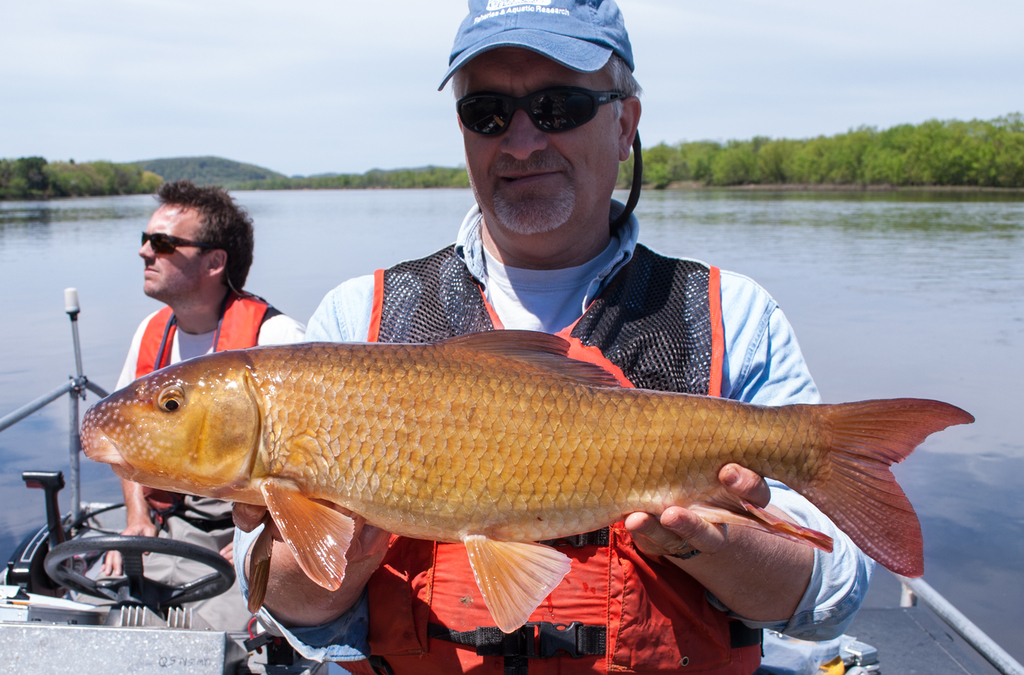
River Redhorse
Moxostoma carinatum
Identify River Redhorse (Moxostoma carinatum) from a photo: try it free in your browser, or get unlimited IDs, no sign-up, with the CatchRules app.
At a glance
River Redhorse (Moxostoma carinatum) is an IUCN Least Concern species regulated in 2 of 66 jurisdictions tracked by CatchRules across the U.S. and Canada.
Confirmed by 192 research-grade iNaturalist observations, with Arkansas, Minnesota, and Wisconsin the top jurisdictions by observation count.
Listed under SARA — verify protected-species rules with the issuing agency before retaining or handling.
Notable details
- River redhorse is the largest sucker in the redhorse group, sometimes exceeding two feet in length.
- It has the most powerful pharyngeal teeth of any redhorse species, purpose-built for crushing freshwater mussels.
- They inhabit large, fast-moving rivers with clean gravel or bedrock substrate.
- River redhorse are considered rare or absent across much of their former range due to habitat degradation.
- They spawn communally over gravel shoals in spring, like others in the genus.
Where River Redhorse are seen
Protected status
- SARA Schedule 1 (special concern): River Redhorse. Canadian populations — harm/harvest prohibited under SARA s.32-33.
Always verify protected-species rules with the issuing agency before retaining or handling.
Background
The river redhorse (Moxostoma carinatum) is a species of freshwater fish endemic to the eastern half of the United States and southeastern Canada. Their weight ranges from 2-10 lbs. It is typically found in clear, large creeks and rivers, though it is sometimes also found in lakes. They are sometimes speared or caught with hook and line using crayfish or worms as bait.
Background excerpt adapted from Wikipedia's River Redhorse article (CC BY-SA). Visit Wikipedia for the full entry.
Frequently asked questions
What is River Redhorse?
River Redhorse (Moxostoma carinatum) is an IUCN Least Concern species regulated in 2 of 66 jurisdictions tracked by CatchRules across the U.S. and Canada.
What is the scientific name for River Redhorse?
River Redhorse is Moxostoma carinatum.
Are there fishing rules for River Redhorse?
River Redhorse does not currently have published fishing rules in CatchRules' curated jurisdictions. Identification, range, and habitat are still tracked above.
How can I identify River Redhorse?
Take a photo with the free CatchRules app for iPhone or Android — on-device identification recognizes River Redhorse along with ~1,500 other species. No sign-up, unlimited use.
Photo credit: iNaturalist / Wikipedia. Identification reference only — verify regulations with the issuing wildlife agency before retaining a catch.