
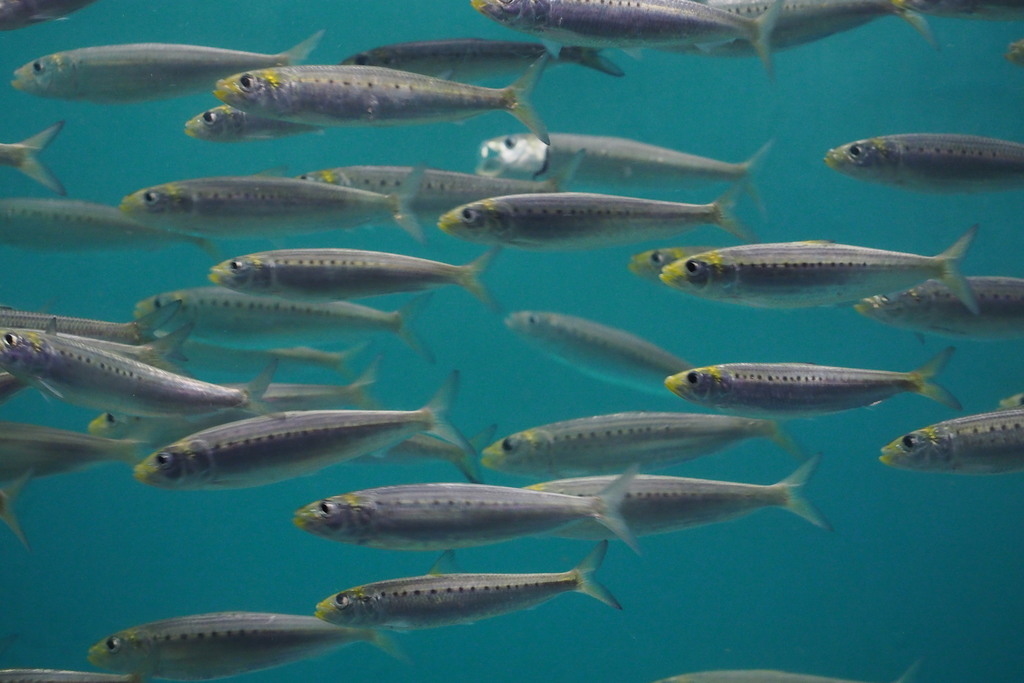
Species profile
Pacific Sardine
Sardinops sagax
Identify Pacific Sardine (Sardinops sagax) from a photo: try it free in your browser, or get unlimited IDs, no sign-up, with the CatchRules app. Plus current fishing rules across 1 jurisdiction.
At a glance
Pacific Sardine (Sardinops sagax) is an IUCN Least Concern bony-fish species with specific harvest rules tracked in 1 of 66 jurisdictions covered by CatchRules.
Confirmed by 211 research-grade iNaturalist observations, with California, Oregon, and British Columbia the top jurisdictions by observation count.
Notable details
- Pacific sardines travel in schools that can contain millions of fish stretching miles long.
- The Pacific sardine fishery collapsed in the 1940s due to overfishing combined with natural climate cycles.
- They filter plankton from the water using specialized gill rakers rather than hunting individual prey.
- Pacific sardines rarely live longer than 5 years, growing rapidly in their first year.
- They are a critical forage species, supporting tuna, salmon, sea lions, and seabirds.
Where Pacific Sardine are seen
Jurisdictions with rules for Pacific Sardine
Background
The South American pilchard (Sardinops sagax) is a sardine of the family Clupeidae, the only member of the genus Sardinops. It is found in the Indo-Pacific and East Pacific oceans. Its length is up to 40 cm (16 in). It has other names, some of which more appropriately refer to subspecies, including blue pilchard, Australian pilchard (S. s. neopilchardus), blue-bait, Californian pilchard (S. s.…
Background excerpt adapted from Wikipedia's Pacific Sardine article (CC BY-SA). Visit Wikipedia for the full entry.
Other bony fish on CatchRules
Frequently asked questions
What is Pacific Sardine?
Pacific Sardine (Sardinops sagax) is an IUCN Least Concern bony-fish species with specific harvest rules tracked in 1 of 66 jurisdictions covered by CatchRules.
What is the scientific name for Pacific Sardine?
Pacific Sardine is Sardinops sagax.
Is Pacific Sardine regulated for fishing?
Yes — Pacific Sardine has fishing regulations in 1 U.S. state and/or Canadian province tracked by CatchRules. See the "Jurisdictions with rules" section above for the binding-source links.
How can I identify Pacific Sardine?
Take a photo with the free CatchRules app for iPhone or Android — on-device identification recognizes Pacific Sardine along with ~1,500 other species. No sign-up, unlimited use.
Photo credit: iNaturalist / Wikipedia. Identification reference only — verify regulations with the issuing wildlife agency before retaining a catch.