
Species profile
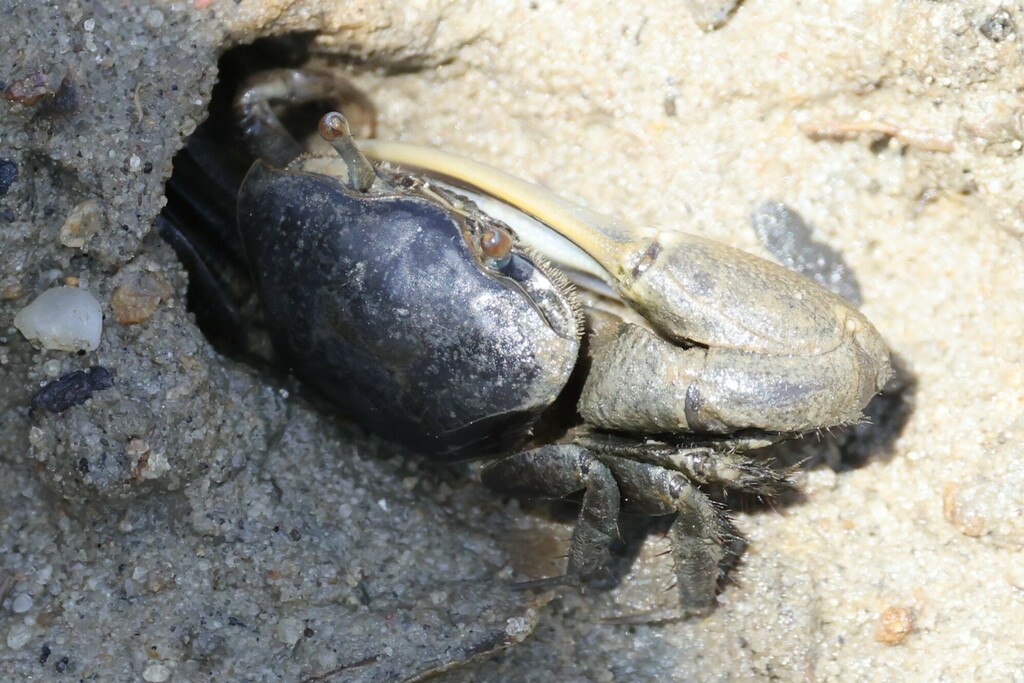
Mud Fiddler Crab
Minuca pugnax
Identify Mud Fiddler Crab (Minuca pugnax) from a photo: try it free in your browser, or get unlimited IDs, no sign-up, with the CatchRules app.
At a glance
Mud Fiddler Crab (Minuca pugnax) is a crustacean present across the CatchRules coverage area but without species-specific bag, size, or season rules tracked in our regulatory dataset.
Confirmed by 3,186 research-grade iNaturalist observations, with Massachusetts, New Jersey, and New York the top jurisdictions by observation count.
Notable details
- Males wave their one enlarged claw in species-specific rhythms to attract mates.
- Retreats to its burrow at high tide and forages for detritus when the tide drops.
- An important food source for herons, egrets, and shorebirds along Atlantic mudflats.
- One of the most abundant crabs on Atlantic salt-marsh mudflats from New England to Florida.
Where Mud Fiddler Crab are seen
Background
Minuca pugnax, commonly known as the Atlantic marsh fiddler crab, is a species of fiddler crab that lives on north-western shores of the Atlantic Ocean.
Background excerpt adapted from Wikipedia's Mud Fiddler Crab article (CC BY-SA). Visit Wikipedia for the full entry.
Frequently asked questions
What is Mud Fiddler Crab?
Mud Fiddler Crab (Minuca pugnax) is a crustacean present across the CatchRules coverage area but without species-specific bag, size, or season rules tracked in our regulatory dataset.
What is the scientific name for Mud Fiddler Crab?
Mud Fiddler Crab is Minuca pugnax.
Are there fishing rules for Mud Fiddler Crab?
Mud Fiddler Crab does not currently have published fishing rules in CatchRules' curated jurisdictions. Identification, range, and habitat are still tracked above.
How can I identify Mud Fiddler Crab?
Take a photo with the free CatchRules app for iPhone or Android — on-device identification recognizes Mud Fiddler Crab along with ~1,500 other species. No sign-up, unlimited use.
Photo credit: iNaturalist / Wikipedia. Identification reference only — verify regulations with the issuing wildlife agency before retaining a catch.