
Species profile
Great White Shark
Carcharodon carcharias
Identify Great White Shark (Carcharodon carcharias) from a photo: try it free in your browser, or get unlimited IDs, no sign-up, with the CatchRules app. Plus current fishing rules across 5 jurisdictions.
At a glance
Great White Shark (Carcharodon carcharias) is an IUCN Vulnerable shark or ray regulated in 7 of 66 jurisdictions tracked by CatchRules across the U.S. and Canada.
Confirmed by 397 research-grade iNaturalist observations, with California, Massachusetts, and Nova Scotia the top jurisdictions by observation count.
Listed under MSA and CITES and SARA — verify protected-species rules with the issuing agency before retaining or handling.
Notable details
- The largest predatory fish in the ocean, reaching over 20 feet in length.
- Regionally endothermic, it keeps its body warmer than surrounding seawater to power faster hunting.
- Females can live over 70 years, making them among the longest-lived fish known.
- Rows of up to 300 serrated teeth continuously replace lost ones throughout their lifetime.
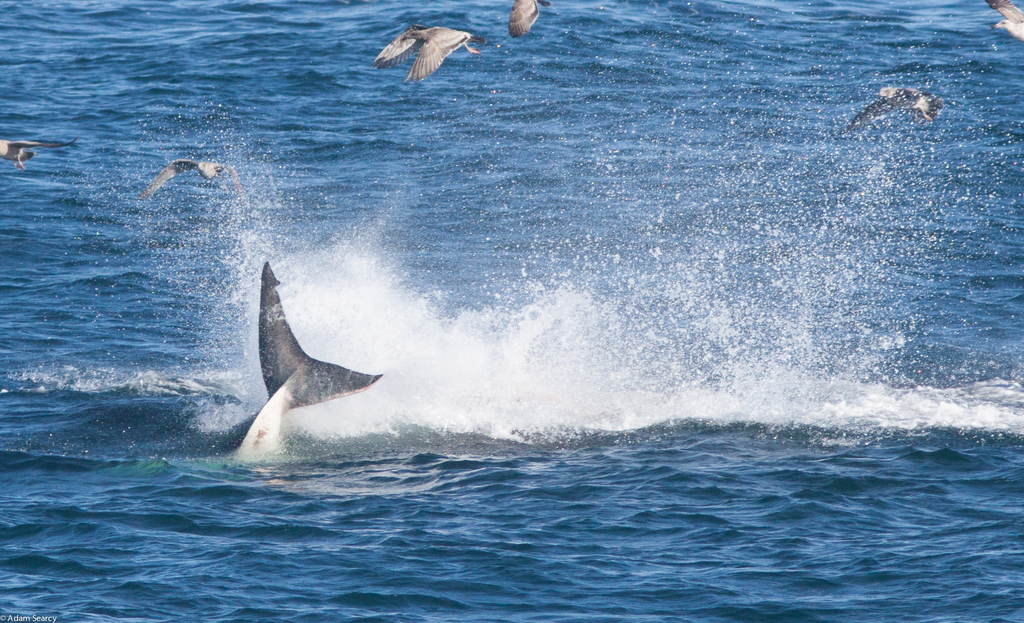
- Can breach completely clear of the water at around 25 mph when ambushing seals from below.
Where Great White Shark are seen
Jurisdictions with rules for Great White Shark
Protected status
- Atlantic HMS prohibited.
- CITES Appendix II (White shark). CoP13 (2005).
- SARA Schedule 1 (endangered): White Shark. Canadian populations — harm/harvest prohibited under SARA s.32-33.
Always verify protected-species rules with the issuing agency before retaining or handling.
Background
The great white shark, also known as the white shark, white pointer, or great white, is a large shark. It is closely related to the mako sharks, the porbeagle, and the salmon shark. It is a robustly built species with a grayish upperside and a white underside. The white shark is one of the largest living shark and fish species, but are smaller than the whale shark and basking shark. It has about…
Background excerpt adapted from Wikipedia's Great White Shark article (CC BY-SA). Visit Wikipedia for the full entry.
Other sharks & rays on CatchRules
Frequently asked questions
What is Great White Shark?
Great White Shark (Carcharodon carcharias) is an IUCN Vulnerable shark or ray regulated in 7 of 66 jurisdictions tracked by CatchRules across the U.S. and Canada.
What is the scientific name for Great White Shark?
Great White Shark is Carcharodon carcharias.
Is Great White Shark regulated for fishing?
Yes — Great White Shark has fishing regulations in 5 U.S. states and/or Canadian provinces tracked by CatchRules. See the "Jurisdictions with rules" section above for the binding-source links.
How can I identify Great White Shark?
Take a photo with the free CatchRules app for iPhone or Android — on-device identification recognizes Great White Shark along with ~1,500 other species. No sign-up, unlimited use.
Photo credit: iNaturalist / Wikipedia. Identification reference only — verify regulations with the issuing wildlife agency before retaining a catch.