
Species profile
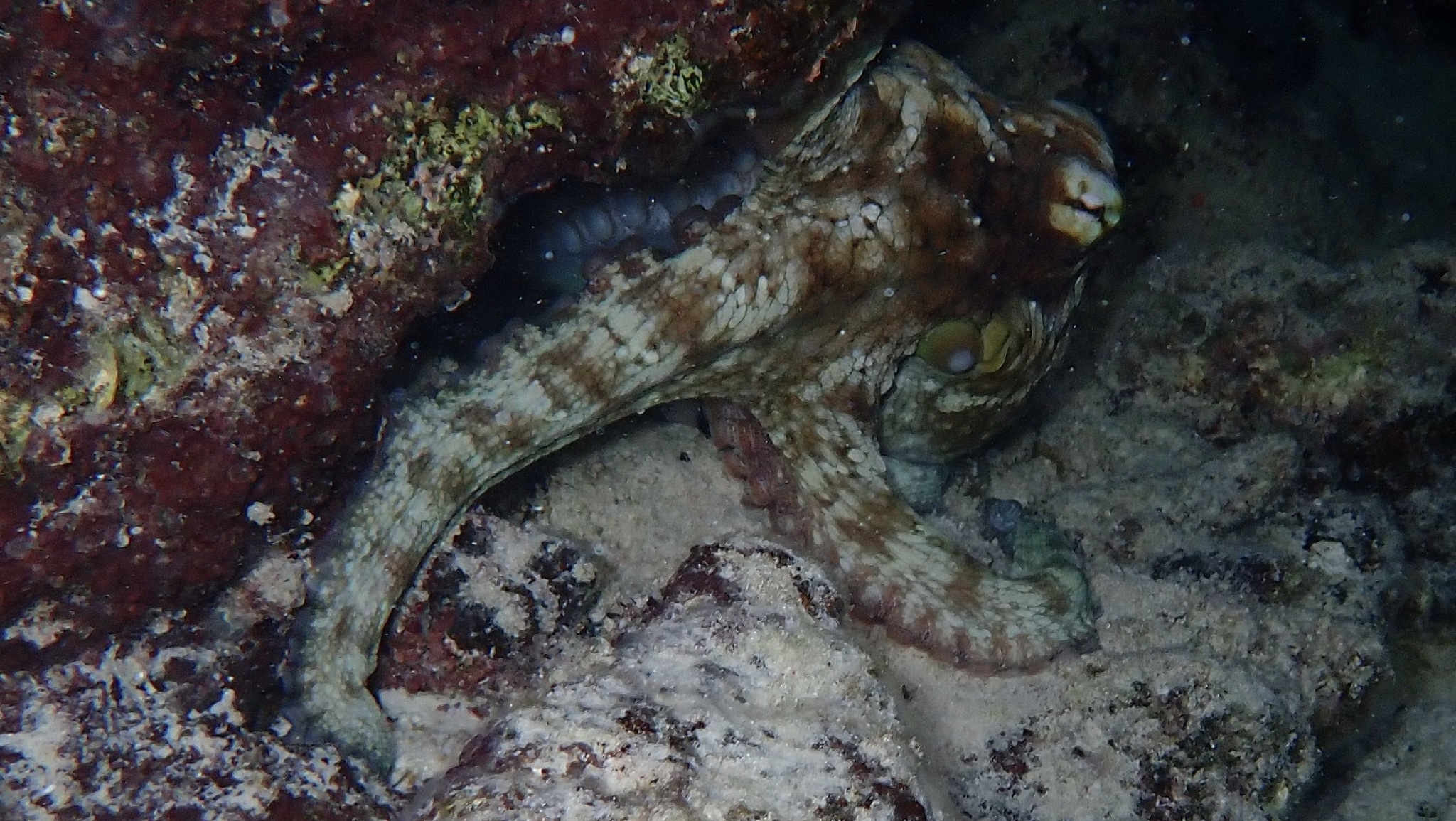
Brazilian Reef Octopus
Octopus insularis
Identify Brazilian Reef Octopus (Octopus insularis) from a photo — free, unlimited, no sign-up — with the CatchRules iPhone app.
At a glance
Brazilian Reef Octopus (Octopus insularis) is an octopus/squid present across the CatchRules coverage area but without species-specific bag, size, or season rules tracked in our regulatory dataset.
Confirmed by 13 research-grade iNaturalist observations across the species' range.
Notable details
- Was misidentified as Octopus vulgaris for decades before scientists recognized it as a distinct species.
- Found across the tropical Atlantic, from Brazil north to the Caribbean and Canary Islands.
- Primarily nocturnal, retreating to reef dens to rest during the day.
- Diet consists mainly of crustaceans, mollusks, and small fish.
Where Brazilian Reef Octopus are seen
Background
Octopus insularis is a species of octopus described in 2008 from individuals found off the coast of Brazil, with a potentially much larger range.
Background excerpt adapted from Wikipedia's Brazilian Reef Octopus article (CC BY-SA). Visit Wikipedia for the full entry.
Other octopus/squid on CatchRules
Frequently asked questions
What is Brazilian Reef Octopus?
Brazilian Reef Octopus (Octopus insularis) is an octopus/squid present across the CatchRules coverage area but without species-specific bag, size, or season rules tracked in our regulatory dataset.
What is the scientific name for Brazilian Reef Octopus?
Brazilian Reef Octopus is Octopus insularis.
Are there fishing rules for Brazilian Reef Octopus?
Brazilian Reef Octopus does not currently have published fishing rules in CatchRules' curated jurisdictions. Identification, range, and habitat are still tracked above.
How can I identify Brazilian Reef Octopus?
Take a photo with the free CatchRules iPhone app — on-device identification recognizes Brazilian Reef Octopus along with ~1,500 other species. No sign-up, unlimited use.
Photo credit: iNaturalist / Wikipedia. Identification reference only — verify regulations with the issuing wildlife agency before retaining a catch.