
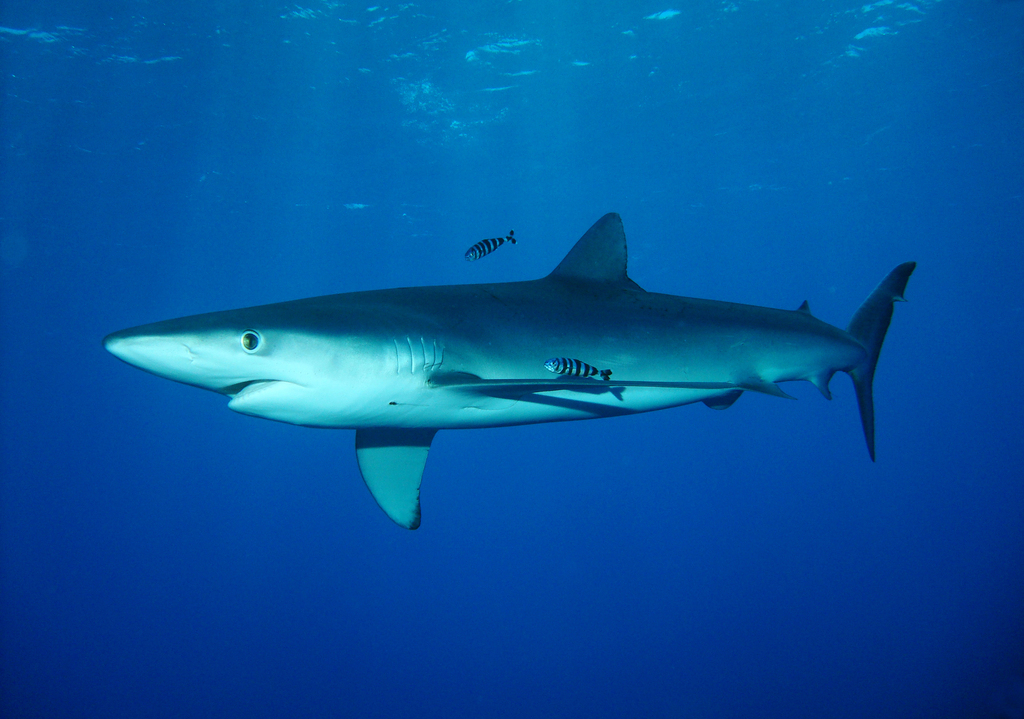
Species profile
Blue Shark
Prionace glauca
Identify Blue Shark (Prionace glauca) from a photo: try it free in your browser, or get unlimited IDs, no sign-up, with the CatchRules app. Plus current fishing rules across 6 jurisdictions.
At a glance
Blue Shark (Prionace glauca) is an IUCN Near Threatened shark or ray regulated in 9 of 66 jurisdictions tracked by CatchRules across the U.S. and Canada.
The strictest bag limit is 1 (Delaware); the most generous is 2 (California).
Across 3 jurisdictions with stated minimum sizes, the average minimum is 54.0 in (≈ 4 ft 6 in).
Confirmed by 101 research-grade iNaturalist observations, with California, British Columbia, and Massachusetts the top jurisdictions by observation count.
Listed under CITES — verify protected-species rules with the issuing agency before retaining or handling.
Notable details
- Blue sharks are highly migratory, crossing entire ocean basins — some tagged individuals have traveled over 5,000 miles.
- Their vivid indigo-blue back and white belly make them one of the most recognizable open-ocean sharks.
- Large females can exceed 12 feet in length, significantly bigger than males of the same age.
- Blue sharks give birth to large litters — up to 135 pups have been recorded in a single birth.
- They are among the most heavily fished sharks in the world, often taken as bycatch in longline fisheries.
Where Blue Shark are seen
Jurisdictions with rules for Blue Shark
Protected status
- CITES Appendix II (Carcharhinidae — all requiem sharks, CoP19 effective Nov 2023).
Always verify protected-species rules with the issuing agency before retaining or handling.
Background
The blue shark (Prionace glauca) is a species of requiem shark, in the family Carcharhinidae, that inhabits deep waters in the world's temperate and tropical oceans. Preferring cooler waters, blue sharks migrate long distances, such as from New England to South America. The species is listed as Near Threatened by the IUCN.
Background excerpt adapted from Wikipedia's Blue Shark article (CC BY-SA). Visit Wikipedia for the full entry.
Other sharks & rays on CatchRules
Frequently asked questions
What is Blue Shark?
Blue Shark (Prionace glauca) is an IUCN Near Threatened shark or ray regulated in 9 of 66 jurisdictions tracked by CatchRules across the U.S. and Canada.
What is the scientific name for Blue Shark?
Blue Shark is Prionace glauca.
Is Blue Shark regulated for fishing?
Yes — Blue Shark has fishing regulations in 6 U.S. states and/or Canadian provinces tracked by CatchRules. See the "Jurisdictions with rules" section above for the binding-source links.
How can I identify Blue Shark?
Take a photo with the free CatchRules app for iPhone or Android — on-device identification recognizes Blue Shark along with ~1,500 other species. No sign-up, unlimited use.
Photo credit: iNaturalist / Wikipedia. Identification reference only — verify regulations with the issuing wildlife agency before retaining a catch.