
Species profile
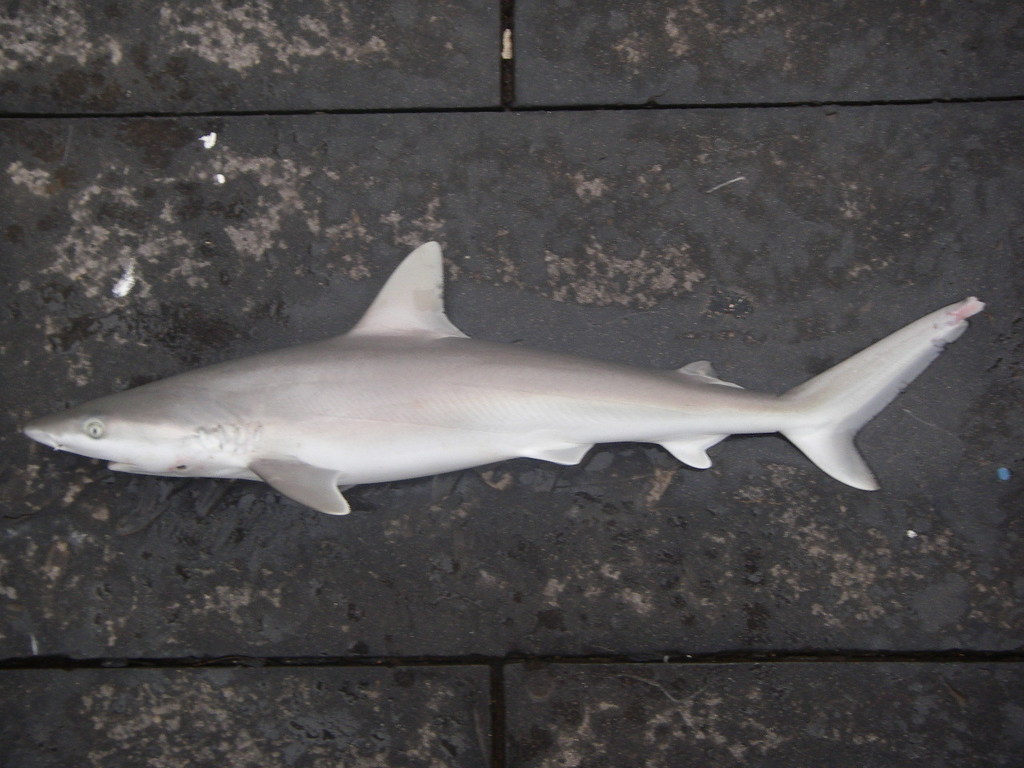
Blacknose Shark
Carcharhinus acronotus
Identify Blacknose Shark (Carcharhinus acronotus) from a photo: try it free in your browser, or get unlimited IDs, no sign-up, with the CatchRules app. Plus current fishing rules across 4 jurisdictions.
At a glance
Blacknose Shark (Carcharhinus acronotus) is an IUCN Endangered shark or ray regulated in 5 of 66 jurisdictions tracked by CatchRules across the U.S. and Canada.
Bag limits are uniform at 1 per angler across the 4 regulating jurisdictions.
Across 3 jurisdictions with stated minimum sizes, the average minimum is 54.0 in (≈ 4 ft 6 in).
Confirmed by 172 research-grade iNaturalist observations, with Florida, South Carolina, and North Carolina the top jurisdictions by observation count.
Listed under CITES — verify protected-species rules with the issuing agency before retaining or handling.
Notable details
- Named for the distinctive dusky smudge on the tip of its snout.
- Reaches a maximum length of about 5 feet and weighs around 22 pounds.
- Performs a dramatic threat display — arching its back and dropping its pectoral fins.
- Gives birth to 3–6 live pups after roughly 10 months of gestation.
- Common in shallow coastal and reef waters of the Caribbean and Gulf of Mexico.
Where Blacknose Shark are seen
Jurisdictions with rules for Blacknose Shark
Protected status
- CITES Appendix II (Carcharhinidae — all requiem sharks, CoP19 effective Nov 2023).
Always verify protected-species rules with the issuing agency before retaining or handling.
Background
The blacknose shark is a species of requiem shark, belonging to the family Carcharhinidae, common in the tropical and subtropical waters of the western Atlantic Ocean. This species generally inhabits coastal seagrass, sand, or rubble habitats, with adults preferring deeper water than juveniles. A small shark typically measuring 1.3 m (4.3 ft) long, the blacknose has a typical streamlined "requiem…
Background excerpt adapted from Wikipedia's Blacknose Shark article (CC BY-SA). Visit Wikipedia for the full entry.
Other sharks & rays on CatchRules
Frequently asked questions
What is Blacknose Shark?
Blacknose Shark (Carcharhinus acronotus) is an IUCN Endangered shark or ray regulated in 5 of 66 jurisdictions tracked by CatchRules across the U.S. and Canada.
What is the scientific name for Blacknose Shark?
Blacknose Shark is Carcharhinus acronotus.
Is Blacknose Shark regulated for fishing?
Yes — Blacknose Shark has fishing regulations in 4 U.S. states and/or Canadian provinces tracked by CatchRules. See the "Jurisdictions with rules" section above for the binding-source links.
How can I identify Blacknose Shark?
Take a photo with the free CatchRules app for iPhone or Android — on-device identification recognizes Blacknose Shark along with ~1,500 other species. No sign-up, unlimited use.
Photo credit: iNaturalist / Wikipedia. Identification reference only — verify regulations with the issuing wildlife agency before retaining a catch.