
Species profile
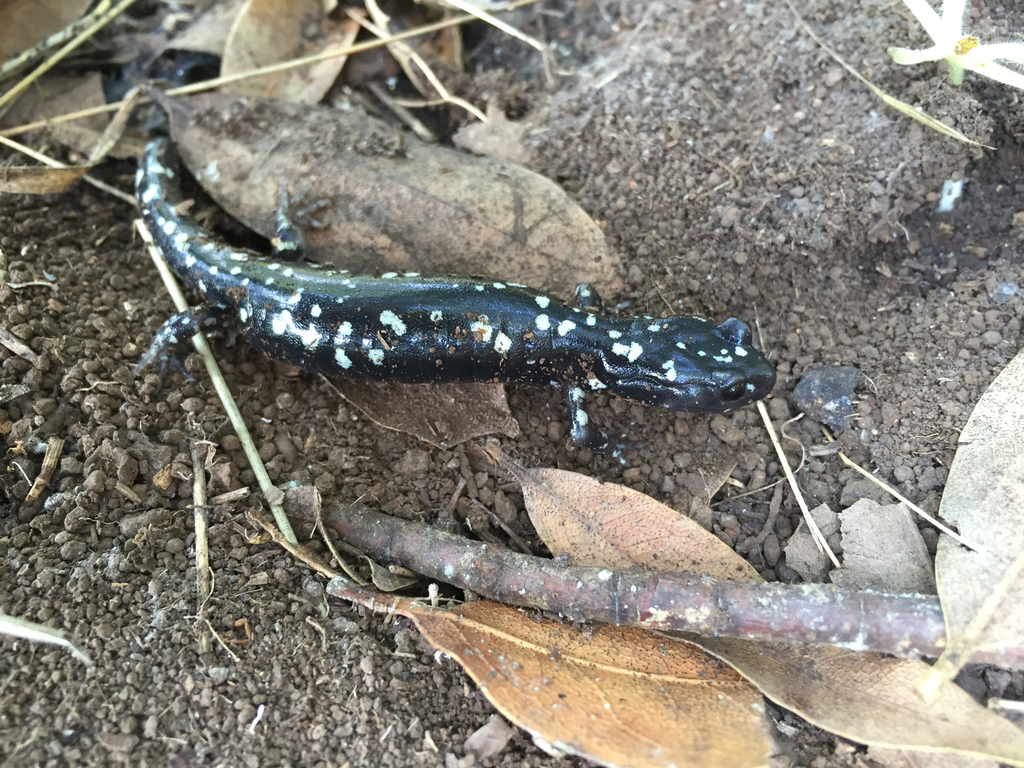
Black Salamander
Aneides flavipunctatus
Identify Black Salamander (Aneides flavipunctatus) from a photo: try it free in your browser, or get unlimited IDs, no sign-up, with the CatchRules app. Plus current fishing rules across 1 jurisdiction.
At a glance
Black Salamander (Aneides flavipunctatus) is an IUCN Near Threatened amphibian with specific harvest rules tracked in 1 of 66 jurisdictions covered by CatchRules.
Confirmed by 1,095 research-grade iNaturalist observations, concentrated in California.
Notable details
- Black salamanders are lungless, absorbing all their oxygen directly through moist skin.
- They can climb trees and rock faces using a semi-prehensile tail and well-developed toe muscles.
- They live only in humid coastal forests of northern California and a small part of southern Oregon.
- Adults typically reach 4–7 inches in total length.
- They hide beneath bark, rocks, and logs by day and forage at night.
Where Black Salamander are seen
Jurisdictions with rules for Black Salamander
Background
The black salamander (Aneides flavipunctatus), also known as the speckled black salamander, is a species of salamander in the family Plethodontidae. It is endemic to the United States. Its natural habitats are temperate forests and temperate grassland. It is threatened by habitat loss.
Background excerpt adapted from Wikipedia's Black Salamander article (CC BY-SA). Visit Wikipedia for the full entry.
Frequently asked questions
What is Black Salamander?
Black Salamander (Aneides flavipunctatus) is an IUCN Near Threatened amphibian with specific harvest rules tracked in 1 of 66 jurisdictions covered by CatchRules.
What is the scientific name for Black Salamander?
Black Salamander is Aneides flavipunctatus.
Is Black Salamander regulated for fishing?
Yes — Black Salamander has fishing regulations in 1 U.S. state and/or Canadian province tracked by CatchRules. See the "Jurisdictions with rules" section above for the binding-source links.
How can I identify Black Salamander?
Take a photo with the free CatchRules app for iPhone or Android — on-device identification recognizes Black Salamander along with ~1,500 other species. No sign-up, unlimited use.
Photo credit: iNaturalist / Wikipedia. Identification reference only — verify regulations with the issuing wildlife agency before retaining a catch.