
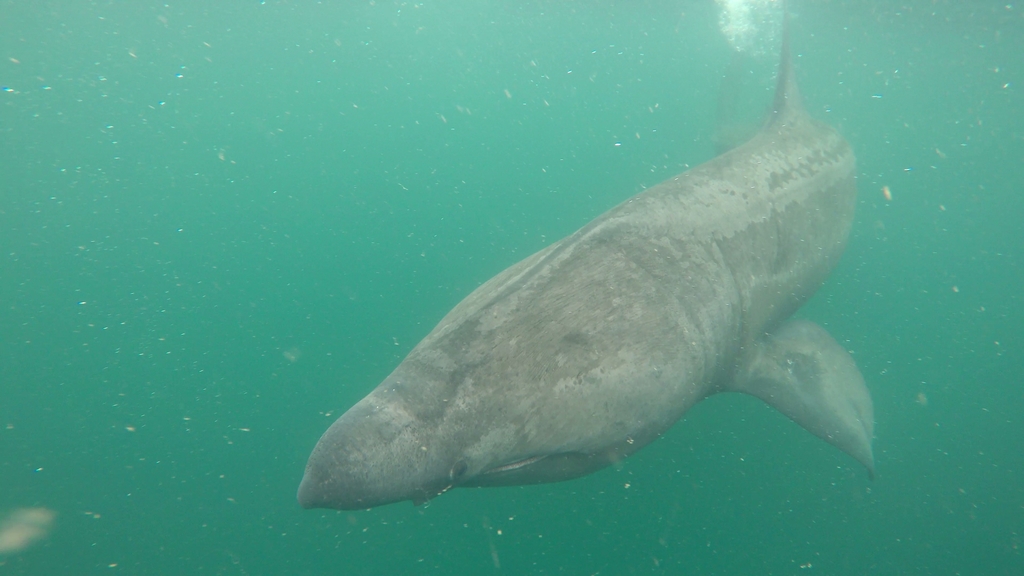
Species profile
Basking Shark
Cetorhinus maximus
Identify Basking Shark (Cetorhinus maximus) from a photo: try it free in your browser, or get unlimited IDs, no sign-up, with the CatchRules app. Plus current fishing rules across 5 jurisdictions.
At a glance
Basking Shark (Cetorhinus maximus) is an IUCN Endangered shark or ray regulated in 6 of 66 jurisdictions tracked by CatchRules across the U.S. and Canada.
Confirmed by 97 research-grade iNaturalist observations, with Massachusetts, Nova Scotia, and California the top jurisdictions by observation count.
Listed under MSA and CITES and SARA — verify protected-species rules with the issuing agency before retaining or handling.
Notable details
- The second largest fish on Earth, confirmed at lengths up to 40 feet.
- Filters roughly 1,500 gallons of water per minute to collect tiny zooplankton.
- Its liver can account for up to 25% of its total body weight.
- Despite its cavernous open mouth, it eats only tiny plankton, copepods, and fish eggs.
- Can leap fully out of the water, possibly to shed lampreys and parasites.
Where Basking Shark are seen
Jurisdictions with rules for Basking Shark
Protected status
- Atlantic HMS prohibited — must release unharmed.
- CITES Appendix II (Basking shark). CoP12 (2003).
- SARA Schedule 1 (endangered): Basking Shark. Canadian populations — harm/harvest prohibited under SARA s.32-33.
Always verify protected-species rules with the issuing agency before retaining or handling.
Background
The basking shark (Cetorhinus maximus) is the second largest living fish, after the whale shark, and one of three plankton-eating sharks along with the whale shark and megamouth shark. Adults typically reach 6–8 m (20–26 ft) in length. They are usually greyish-brown, with mottled skin. The caudal fin has a strong lateral keel and a crescent shape.
Background excerpt adapted from Wikipedia's Basking Shark article (CC BY-SA). Visit Wikipedia for the full entry.
Other sharks & rays on CatchRules
Frequently asked questions
What is Basking Shark?
Basking Shark (Cetorhinus maximus) is an IUCN Endangered shark or ray regulated in 6 of 66 jurisdictions tracked by CatchRules across the U.S. and Canada.
What is the scientific name for Basking Shark?
Basking Shark is Cetorhinus maximus.
Is Basking Shark regulated for fishing?
Yes — Basking Shark has fishing regulations in 5 U.S. states and/or Canadian provinces tracked by CatchRules. See the "Jurisdictions with rules" section above for the binding-source links.
How can I identify Basking Shark?
Take a photo with the free CatchRules app for iPhone or Android — on-device identification recognizes Basking Shark along with ~1,500 other species. No sign-up, unlimited use.
Photo credit: iNaturalist / Wikipedia. Identification reference only — verify regulations with the issuing wildlife agency before retaining a catch.