
Species profile
Atlantic Salmon
Salmo salar
Identify Atlantic Salmon (Salmo salar) from a photo: try it free in your browser, or get unlimited IDs, no sign-up, with the CatchRules app. Plus current fishing rules across 25 jurisdictions.
At a glance
Atlantic Salmon (Salmo salar) is an IUCN Extinct bony-fish species regulated in 14 of 66 jurisdictions tracked by CatchRules across the U.S. and Canada.
The strictest bag limit is 1 (Connecticut); the most generous is 5 (Indiana).
Confirmed by 628 research-grade iNaturalist observations, with Nova Scotia, Michigan, and Newfoundland and Labrador the top jurisdictions by observation count.
Listed under the U.S. Endangered Species Act and SARA — verify protected-species rules with the issuing agency before retaining or handling.
Notable details
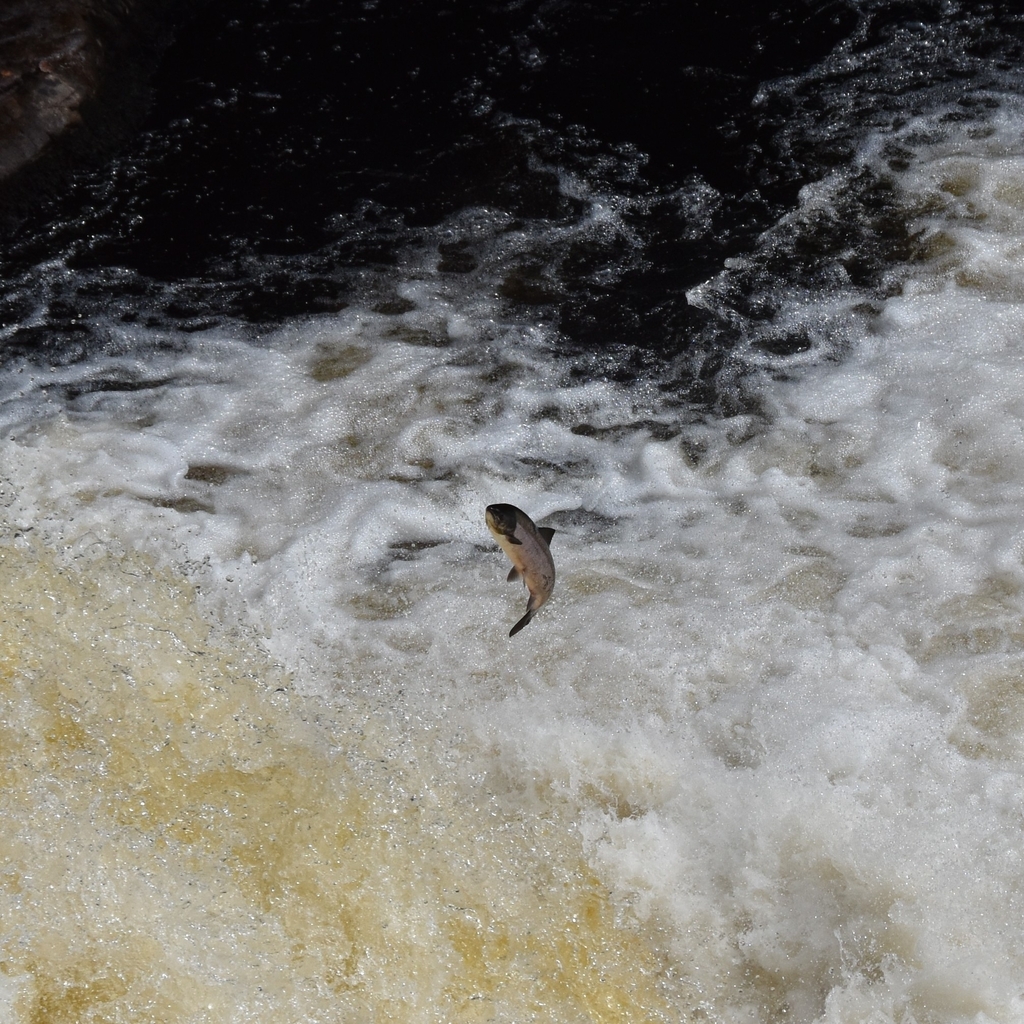
- "Salar" means "the leaper" in Latin, referencing their ability to jump waterfalls upstream.
- Unlike Pacific salmon, Atlantic salmon can survive spawning and return to sea to feed again.
- They stop eating entirely once they enter freshwater rivers to spawn.
- Adults can weigh over 30 lbs and measure up to 4 feet long.
- They use a precise sense of smell to find the exact stream where they hatched.
Where Atlantic Salmon are seen
Jurisdictions with rules for Atlantic Salmon
Protected status
- Atlantic salmon — GoM DPS endangered.
- SARA Schedule 1 (endangered): Atlantic Salmon. Canadian populations — harm/harvest prohibited under SARA s.32-33.
Always verify protected-species rules with the issuing agency before retaining or handling.
Background
The Atlantic salmon (Salmo salar) is a species of ray-finned fish in the family Salmonidae. It is found in the northern Atlantic Ocean, in rivers that flow into the north Atlantic and, due to human introduction, in the north Pacific Ocean. Atlantic salmon have long been the target of recreational and commercial fishing, and this, as well as habitat destruction, has reduced their numbers…
Background excerpt adapted from Wikipedia's Atlantic Salmon article (CC BY-SA). Visit Wikipedia for the full entry.
Other bony fish on CatchRules
Frequently asked questions
What is Atlantic Salmon?
Atlantic Salmon (Salmo salar) is an IUCN Extinct bony-fish species regulated in 14 of 66 jurisdictions tracked by CatchRules across the U.S. and Canada.
What is the scientific name for Atlantic Salmon?
Atlantic Salmon is Salmo salar.
Is Atlantic Salmon regulated for fishing?
Yes — Atlantic Salmon has fishing regulations in 25 U.S. states and/or Canadian provinces tracked by CatchRules. See the "Jurisdictions with rules" section above for the binding-source links.
How can I identify Atlantic Salmon?
Take a photo with the free CatchRules app for iPhone or Android — on-device identification recognizes Atlantic Salmon along with ~1,500 other species. No sign-up, unlimited use.
Photo credit: iNaturalist / Wikipedia. Identification reference only — verify regulations with the issuing wildlife agency before retaining a catch.