
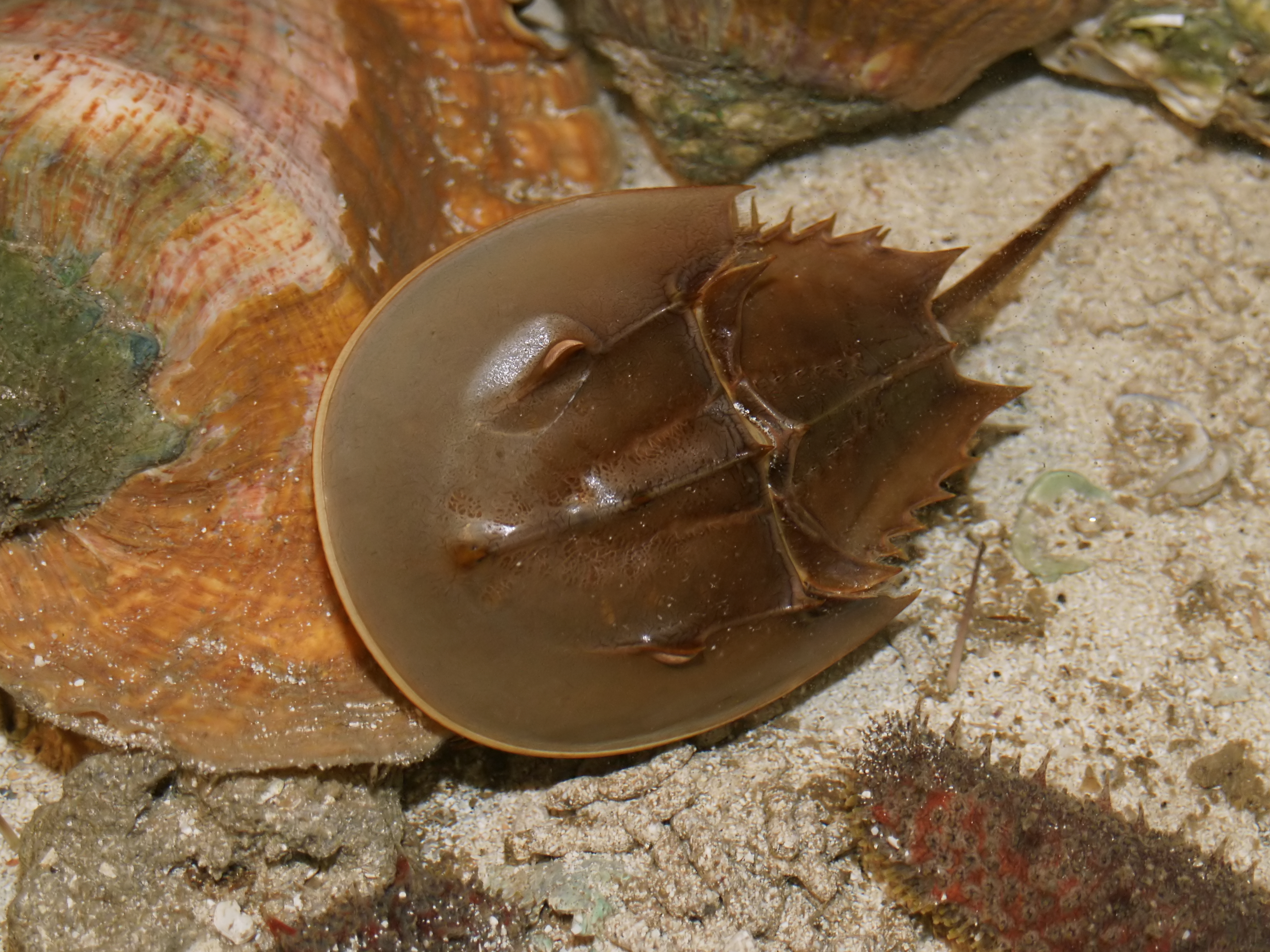
Species profile
Atlantic Horseshoe Crab
Limulus polyphemus
Identify Atlantic Horseshoe Crab (Limulus polyphemus) from a photo: try it free in your browser, or get unlimited IDs, no sign-up, with the CatchRules app. Plus current fishing rules across 3 jurisdictions.
At a glance
Atlantic Horseshoe Crab (Limulus polyphemus) is an IUCN Vulnerable crustacean regulated in 5 of 66 jurisdictions tracked by CatchRules across the U.S. and Canada.
The strictest bag limit is 5 (New York); the most generous is 100 (Florida).
Confirmed by 22,321 research-grade iNaturalist observations, with Florida, Massachusetts, and New Jersey the top jurisdictions by observation count.
Notable details
- Despite the name, horseshoe crabs are more closely related to spiders and scorpions than to true crabs.
- Their blue blood is used worldwide to test medical devices and vaccines for dangerous bacterial contamination.
- Females grow nearly twice as large as males, reaching up to about 60 cm wide including the tail.
- Horseshoe crabs have survived largely unchanged for around 450 million years, predating the dinosaurs.
- A single female can deposit tens of thousands of eggs during one breeding season on sandy beaches.
Where Atlantic Horseshoe Crab are seen
Jurisdictions with rules for Atlantic Horseshoe Crab
Background
The Atlantic horseshoe crab (Limulus polyphemus), also known as the American horseshoe crab, is a species of marine and brackish chelicerate arthropod. Despite their name, horseshoe crabs are more closely related to spiders, ticks, and scorpions than to crabs. This species is found in the Gulf of Mexico and along the Atlantic coast of North America. A main area of annual migration is Delaware Bay.
Background excerpt adapted from Wikipedia's Atlantic Horseshoe Crab article (CC BY-SA). Visit Wikipedia for the full entry.
Other crabs/lobsters/shrimp on CatchRules
Frequently asked questions
What is Atlantic Horseshoe Crab?
Atlantic Horseshoe Crab (Limulus polyphemus) is an IUCN Vulnerable crustacean regulated in 5 of 66 jurisdictions tracked by CatchRules across the U.S. and Canada.
What is the scientific name for Atlantic Horseshoe Crab?
Atlantic Horseshoe Crab is Limulus polyphemus.
Is Atlantic Horseshoe Crab regulated for fishing?
Yes — Atlantic Horseshoe Crab has fishing regulations in 3 U.S. states and/or Canadian provinces tracked by CatchRules. See the "Jurisdictions with rules" section above for the binding-source links.
How can I identify Atlantic Horseshoe Crab?
Take a photo with the free CatchRules app for iPhone or Android — on-device identification recognizes Atlantic Horseshoe Crab along with ~1,500 other species. No sign-up, unlimited use.
Photo credit: iNaturalist / Wikipedia. Identification reference only — verify regulations with the issuing wildlife agency before retaining a catch.