
Species profile
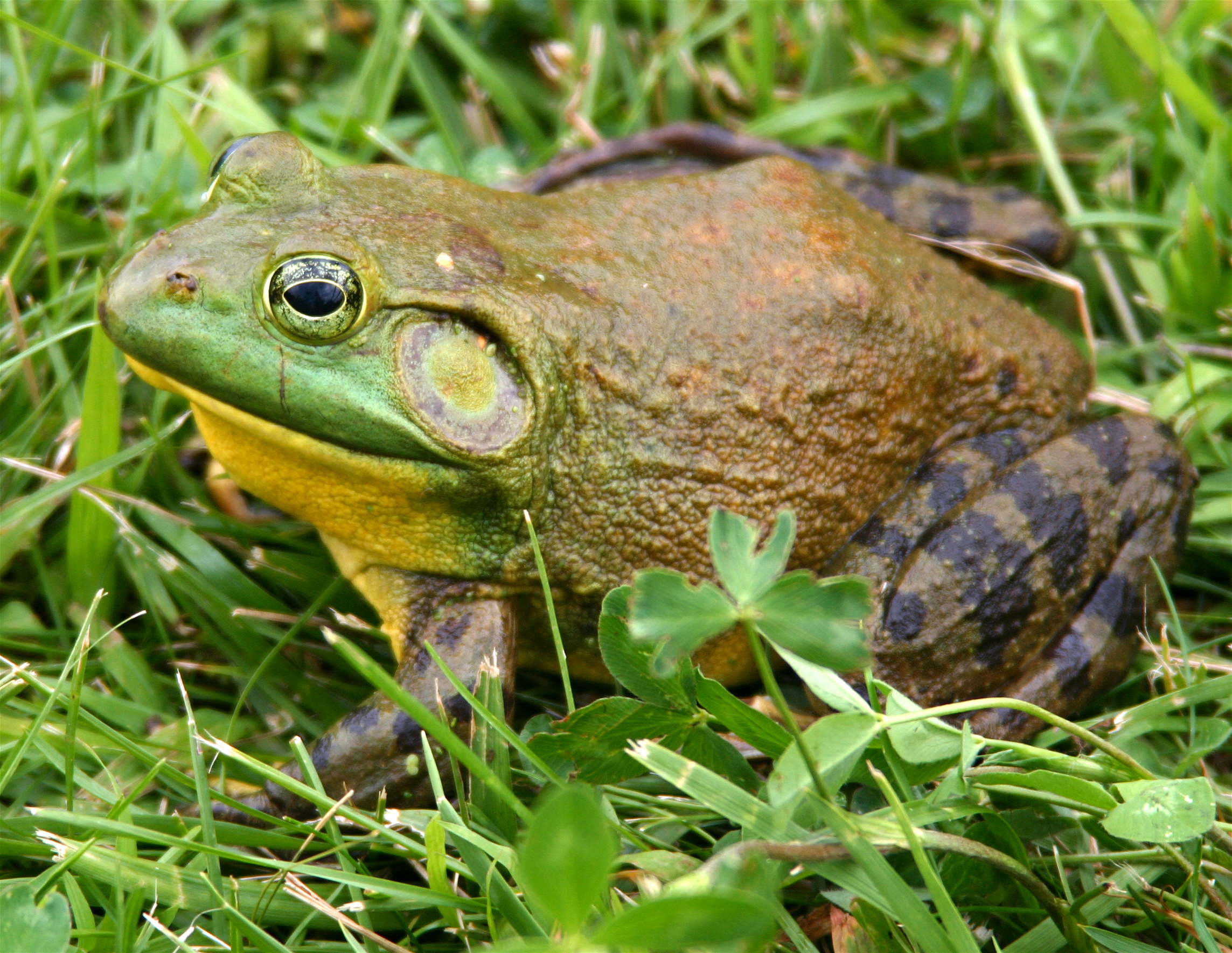
American Bullfrog
Lithobates catesbeianus
Identify American Bullfrog (Lithobates catesbeianus) from a photo: try it free in your browser, or get unlimited IDs, no sign-up, with the CatchRules app. Plus current fishing rules across 15 jurisdictions.
At a glance
American Bullfrog (Lithobates catesbeianus) is an IUCN Least Concern amphibian regulated in 17 of 66 jurisdictions tracked by CatchRules across the U.S. and Canada.
The strictest bag limit is 5 (Wisconsin); the most generous is 50 (North Dakota).
Confirmed by 117,027 research-grade iNaturalist observations, with Texas, California, and Ontario the top jurisdictions by observation count.
Notable details
- North America's largest frog, reaching up to 8 inches in body length and over 1.5 pounds.
- Males produce a deep "jug-o-rum" call audible from nearly a mile away.
- Tadpoles take 1 to 3 years to metamorphose — the longest of any North American frog.
- Voracious predators, they eat fish, insects, small birds, snakes, and other frogs.
- Invasive in western North America, parts of Europe, and Asia, threatening native amphibians.
Where American Bullfrog are seen
Jurisdictions with rules for American Bullfrog
Background
The American bullfrog (Lithobates catesbeianus or Rana catesbeiana), often simply known as the bullfrog in Canada and the United States, is an amphibious frog, a member of the family Ranidae, or “true frogs”. This frog has an olive green back and sides blotched with brownish markings and a whitish belly spotted with yellow or grey. The upper lip is often bright green and males have yellow…
Background excerpt adapted from Wikipedia's American Bullfrog article (CC BY-SA). Visit Wikipedia for the full entry.
Frequently asked questions
What is American Bullfrog?
American Bullfrog (Lithobates catesbeianus) is an IUCN Least Concern amphibian regulated in 17 of 66 jurisdictions tracked by CatchRules across the U.S. and Canada.
What is the scientific name for American Bullfrog?
American Bullfrog is Lithobates catesbeianus.
Is American Bullfrog regulated for fishing?
Yes — American Bullfrog has fishing regulations in 15 U.S. states and/or Canadian provinces tracked by CatchRules. See the "Jurisdictions with rules" section above for the binding-source links.
How can I identify American Bullfrog?
Take a photo with the free CatchRules app for iPhone or Android — on-device identification recognizes American Bullfrog along with ~1,500 other species. No sign-up, unlimited use.
Photo credit: iNaturalist / Wikipedia. Identification reference only — verify regulations with the issuing wildlife agency before retaining a catch.